
ABHPC Prevention Pathways Monthly Bulletin for February 2026

Advanced Behavioral Health California Update
There are four (4) exciting events scheduled in February 2026 for Prevention Professionals. Stay tuned for announcements and registration!
- From Insight to Impact: Applying a Shared Risk and Protective Factor Framework for Collective Change in Local Prevention:
Thursday, February 19th 1:00 p.m. – 2:30 p.m. PT - Language Matters: Using Person-First Language to Decrease Stigma:
Tuesday, February 24th 1:00 p.m. – 2:30 p.m. PT - Collaborative Prevention Strategies with Pregnant People, Parents, and Caregivers Part 1: Pregnant People, Parents, and Caregivers of Children Under 5:
Wednesday, February 25th from 1:00 p.m. – 2:30 p.m. PT - Collaborative Prevention Strategies with Pregnant People, Parents, and Caregivers Part 2: Parents and Caregivers of Children 5 and Older:
Thursday, February 26th from 1:00 p.m. – 2:30 p.m. PT
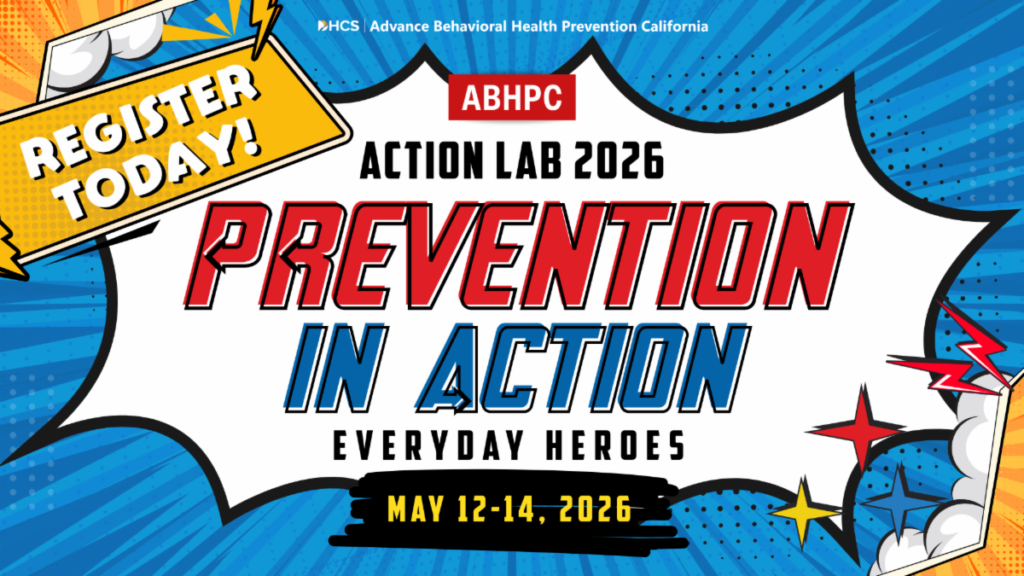
We’re excited to welcome you to the ABHPC 2026 Action Lab: Everyday Heroes this May in Anaheim, CA. Register and book your room today!

Black History Month
February marks Black History Month, which offers an important opportunity to reflect on the resilience, leadership, and contributions of Black communities in the United States while also examining ongoing factors that impact wellbeing and health outcomes. Prevention efforts must acknowledge these structural factors and prioritize community-driven solutions that build trust, promote healing, and honor lived experience. Meaningful change can be made through using prevention strategies that are culturally grounded, focus on centering and uplifting community leaders, and use evidence-based practices.
Below are California-based projects and events to explore around wellbeing and Black History Month.
- California Reducing Disparities Project: aims to reduce mental health disparities for five focus populations in California.
- Black History Month Events in California
- City of Pasadena Black History Month Events
- California State Parks – Black History Month

National Eating Disorder Awareness Week
National Eating Disorder Awareness Week (NEDAW) highlights the importance of recognizing eating disorders as serious, complex health conditions that affect people of all ages, genders, races, and socioeconomic backgrounds.
This year, NEDAW takes place from February 23rd to March 1st. The theme this year is Fighting for Change, Committed to Change – Every Body Belongs. Each day will highlight community events, educational content, and resources for eating disorder awareness.
Prevention professionals benefit from recognizing the intersection between eating disorders, substance use, trauma, and mental health. Co-occurring substance use and disordered eating behaviors can elevate health risks, making early prevention, screening, and education essential. Strategies such as promoting positive body image, media literacy, and healthy coping skills can benefit outcomes for substance use prevention as well as healthy eating behaviors. This can look like school and community-based prevention programs that foster self-esteem, stress management, and social connection help reduce risk factors for both eating disorders and substance misuse. Cross-sector collaboration between prevention, mental health, and public health systems strengthens California’s capacity to address these interconnected issues holistically.
Prevention Models: The Public Health Approach
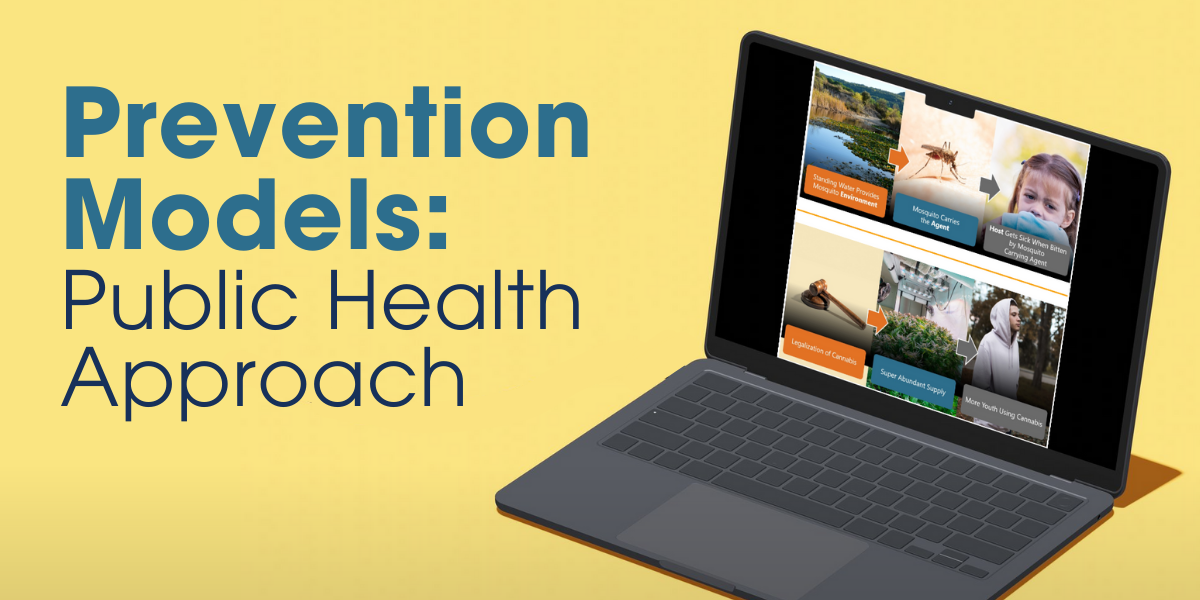
The public health approach was originally developed to explain how diseases are transmitted. It has also been expanded to explain how behavioral health conditions spread. The public health approach describes a three-prong relationship between an environment, an agent, and a host.
In a classic example of how diseases spread, the parasite that spreads malaria lives in standing water (the environment). Mosquitoes that require standing water to lay their eggs get infected by the parasite (the agent). The mosquito then bites a person (the host), and malaria spreads. To prevent malaria, standing water could be drained (changing the environment); mosquitoes could be killed by poison or predation thereby killing the parasite (changing the agent); or people could be vaccinated against malaria (changing the host.)
Applied to substance use prevention, the legalization of cannabis for adults in California in 2016 (a change in the legal environment) created an abundant supply of cannabis (the agent), as people who never grew cannabis suddenly legally could. This led to more youth (the host) having access to cannabis. Prevention of cannabis use and misuse could involve changing the law or enforcing laws more consistently (changing the legal environment), limiting supply through law enforcement (changing the agent) or educating youth and adults about the possible harms to youth from using cannabis (changing the host).

Ethical Principles in Prevention
Ethical principles are foundational to effective and trustworthy substance use prevention work. The Certified Prevention Specialist (CPS) Code of Ethics identifies six principles: Non-Discrimination, Competency, Integrity, Nature of Services, Confidentiality, and Ethical Obligations for Community and Society. These principles aim to ensure that services are delivered with respect, transparency, and accountability.
- Principle 1: Non-discrimination
Prevention specialists must provide equitable, inclusive, and culturally competent services without discrimination. Non-discrimination includes ensuring accessibility, appropriate accommodations, and compliance with all laws to uphold dignity, social justice, and respect for all individuals. - Principle 2: Competency
Prevention specialists must maintain and continually strengthen professional competence through ethical practice, ongoing learning, cultural awareness, appropriate supervision, and responsible recognition of their own limits. - Principle 3: Integrity
Prevention specialists must uphold honesty, transparency, and accountability in all professional and personal conduct, placing public trust and ethical standards above personal gain. - Principle 4: Nature of Services
Prevention specialists must deliver services that do no harm, are respectful and non-exploitative, protect professional boundaries, and prioritize the safety, rights, and well-being of participants, employees, and communities. - Principle 5: Confidentiality
Prevention specialists must safeguard all confidential information by securely collecting, maintaining, and sharing data only as necessary and in accordance with applicable laws and ethical standards. - Principle 6: Ethical Obligations for Community and Society
Prevention specialists must act in the public interest by promoting health, wellness, and prevention-informed policy while engaging in advocacy and education within legal, ethical, and funding guidelines.
Upholding the CPS Code of Ethics strengthens public trust and reinforces the prevention professional’s role to promote health within California’s behavioral health system.
What’s the latest from DHCS
DHCS Substance Use Disorder Integrated Care Conference – Call for Proposals.
Don’t miss your chance to present at this year’s 2026 DHCS Substance Use Disorder (SUD) Integrated Care Conference, August 25 – 27, 2026, at the Hyatt Regency Long Beach. DHCS invites community-based organizations, providers, state agencies, and subject matter experts in the behavioral health field to submit proposals. Topics should focus on innovative and effective strategies in SUD prevention, treatment, recovery, quality improvement, and other opportunities that advance the integration of behavioral health services. The deadline to submit a proposal is Friday, March 20, 2026. Visit the Call for Proposals webpage for submission requirements. For questions, please email DHCSPrevention@dhcs.ca.gov.
If you are interested in having your organization or prevention program featured in an upcoming bulletin, email Olivia Shrago at oshrago@cars-rp.org to get started!