
ABHPC Prevention Pathways Monthly Bulletin for July 2024
Re-Introduction to Advance Behavioral Health Prevention California (ABHPC)
After a successful first year of serving over 2,000 participants through over 40 training events, we are excited to be entering Year 2 of ABHPC! For folks doing prevention work in California between 2003-2022, you likely were familiar with the Community Prevention Initiative, known as CPI. After CPI sunset in 2022, the California Department of Health Care Services (DHCS) partnered with the Center for Applied Research Solutions, by providing funding to develop ABHPC as part of California’s The Big 5 by 2025, or “Big 5.”
The Big 5 initiative aims “to strengthen the state-level planning and evaluation process, encourage widespread use of evidence based-practice and community-defined practices for behavioral health prevention, streamline data collection and reporting, and reimagine the statewide technical assistance and training platform.” ABHPC assists these efforts by providing training and technical assistance (TTA) for primary prevention across California at no cost. ABHPC TTA covers evidence-based strategies and best practices in primary prevention, including extensive coverage of health equity, social drivers of health, and coalition building. You can request TTA and learn more about our offered professional competency trainings here.
ABHPC also hosts the Prevention Pathways program, which supports the development and retention of the prevention workforce. Preventions Pathways provides networking opportunities, training on emerging and essential prevention topics, and mentoring opportunities for prevention professionals across all levels of experience. You can find additional resources, including information on how ABHPC can help you become a Certified Prevention Specialist, on our website https://abhpc.org.
National Minority Mental Health Awareness Month
July marks National Minority Mental Health Awareness Month, a time to recognize the unique mental health needs of minority populations and the disparities embedded throughout the healthcare system that impact mental health outcomes for these populations.
The month was founded in 2008 in remembrance of Bebe Moore Campbell, an author and journalist who was a fierce advocate for mental health. Campbell was passionate about ending stigma, spreading mental health information, and bringing awareness to the impacts of racism and culture on mental health. Campbell co-founded National Alliance on Mental Illness Urban Los Angeles and wrote several groundbreaking publications about mental health.
A major aspect of mental health work for minority populations includes addressing generational stigma and stigma within mental health care systems. Effective prevention must embed health equity into each step from assessment to planning to implementation. Learning about barriers to behavioral health support faced by minority populations and methods of addressing these can shift the prevention field to serve all.
The California DHCS is implementing a variety of projects, training, and technical assistance to increase mental health equity and cultural competence throughout county plans. You can learn more about these projects including plans specific to priority populations and counties here.
Additional National Minority Mental Health Awareness Month Resources:
» Click this link to see 2024 and previous year’s Black, Indigenous, and People of Color Mental Health Toolkits from the Mental Health Association.
» The Center for Disease Control has published a resource for what individuals, public entities, health educators, healthcare systems, and states and communities can do to promote health equity: https://www.cdc.gov/minority-health/features/minority-mental-health.html?CDC_AAref_Val=https://www.cdc.gov/healthequity/features/minority-mental-health/index.html
» The United States Department of Health and Human Services has toolkits and educational resources to fit their theme for National Minority Health Month 2024: Be the Source for Better Health.
Center for Substance Abuse Prevention – Six Prevention Strategies: Education
The Center for Substance Abuse Prevention, or CSAP, has developed six major prevention strategies. These broad categories are used to describe the types of approaches effective in comprehensive substance use prevention. The categories are Information Dissemination, Education, Alternatives, Problem Identification and Referral, Community Based‐Processes, and Environmental.
Education adds an interactive component to Information Dissemination, with communication between an educator and their participants. Educational activities aim to build “critical life and social skills including decision making, peer pressure resistance, coping with stress, problem solving, interpersonal communication, and systematic and judgmental capabilities.” This might look like classroom or community educational services, youth or adult groups, mentoring programs, peer-leader programs, or parenting/family management classes. In order to demonstrate Education, our community spotlight guest writer Jason Strickler, M.A. (He/Him/El) joins us to write about Pueblo Y Salud, Inc. and his role as prevention program coordinator.
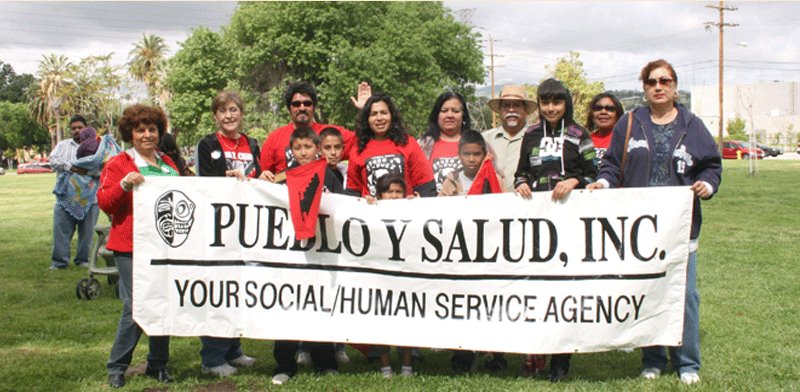
Community Spotlight: Pueblo Y Salud, Inc.
Pueblo y Salud, Inc. is nestled in the center of the San Fernando valley in the City of San Fernando, where once a month volunteers, youth, parents, educators and preventionists meet to attend the Youth 4 Hoods Coalition. High school students sit among prevention practitioners, school counselors, and concerned parents as they share the realities of student drug use on campus. “You can’t walk into the bathroom without smelling it,” says the student, as she describes that vaping and marijuana use is a harsh reality for many public schools in the area. This comment was made over a year ago in a coalition meeting, and her insight has fueled the coalition’s efforts since. According to the 2022 community needs assessment by Los Angeles County Substance Abuse Prevention and Control, 18.4% of youth ages 12-17 have used marijuana in their lifetime. The coalition has collected additional data using core measure questions, focus groups, and key informant interviews of school personnel, parents, and students, that confirm vaping and marijuana use is a major concern in the community.
In the neighboring city of Pacoima is a middle school that engaged with Youth 4 Hoods for support, because the amount of marijuana use incidents on their campus has dramatically increased. This school is a Community Schools Program grantee, which is a Los Angeles Unified School District initiative designed to improve student outcomes through addressing students’ academic, cognitive, physical, mental, and social-emotional needs. Through this collaboration, the coalition supports various education and engagement activities. One example is a school-wide assembly that engaged over 300 students in dialogue about the harmful effects of vaping and marijuana use. “This event brought to light the effects of marijuana and how vaping at a young age can start to affect young minds, ” said Drug-Free Communities (DFC) Director, Hugo Blanco, “the students started to realize the negative effects and that it is something to think twice about.” After the assembly, students started to recognize coalition members as people they can come to for support or questions about substance use. When Youth 4 Hoods is on their campus, they know that they are going to be challenged, engaged, and taught the value of making healthy choices. “We are always welcomed by students and staff, because we are authentic and have a genuine concern for the youth in our community,” said DFC Coordinator, Jason Strickler. “It goes to show the impact of building relationships, in addition to providing information and education.”
Pueblo y Salud and the Youth 4 Hoods Coalition are prime examples of “not about us, without us,” keeping youth voices at the center of our work and working hand-in-hand across sectors to promote change in marginalized communities. With strong leadership from emerging prevention professionals who grew up in the community, Youth 4 Hoods’ recipe for success is the perfect balance of cultural competence, community knowledge, and authentic capacity building.
For more information on Pueblo y Salud’s other prevention programs and services, please contact Jason Strickler at 818-837-2272 or email at strickler@pys.org.
If you are interested in having your organization or prevention program featured in an upcoming bulletin, email Olivia Shrago at oshrago@cars-rp.org to get started!