
ABHPC Prevention Pathways Monthly Bulletin for January 2024
Positive Childhood Experiences & HOPE Science Framework
The original implementation of the CDC-Kaiser Adverse Childhood Experiences (ACEs) study occurred in the mid-1990s. The study showed that exposure to ACEs such as violence, abuse, and neglect is linked to long-term challenges in life including risky behaviors, lower education and occupational opportunities, mental and physical health diagnoses, and others. Recent research indicates the importance of emphasizing Positive Childhood Experiences (PCEs) as a method of identifying and drawing on individual strengths and protective factors to mitigate the effects of ACEs.

The assessment for PCEs includes seven questions taken from the Behavioral Risk Factor Surveillance Survey that ask about relationships with family, peers, and the community. Research on PCEs shows a link between PCEs and lower self-reported depression/poor mental health and higher adult-reported social and emotional support, even when accounting for the presence of ACEs. These findings, among other research, led to the development of the Healthy Outcomes from Positive Experiences (HOPE) Framework and HOPE National Resource Center at Tufts Medical Center in Boston, Massachusetts.
The Hope Framework:
- Relationships within the family and other children and adults through interpersonal activities.
- Environment: safe, equitable, stable environments for living, playing, learning at home and in school.
- Engagement: social & civic engagement to develop a sense of belonging and connectedness.
- Emotional Growth: through playing and interacting with peers for self-awareness and self-regulation.
The goal of the HOPE Framework is to shift trauma-informed care to not only focus on challenges and traumatic experiences but identifying and amplifying strengths and resiliency. Prevention professionals can work towards increased access to PCEs that improve lifelong outcomes for health and wellbeing. To learn more about local efforts regarding access to PCEs in California and to see how you can incorporate these practices in your own community, check out California PACEs Connection.
National Mentoring Month
When was the last time you checked in with a mentor? Have you ever considered putting your skills to use as a mentor for someone else? You might want to make these a goal for January, which marks National Mentoring Month. Mentoring relationships are correlated with long-term positive outcomes in attitudes towards career, long-term success, and self-esteem. School-aged youth who have mentors are less likely to skip classes, have more positive attitudes towards school, are less likely to start using illegal drugs and alcohol. Yet approximately 1 in 3 youth do not have mentors – and youth who are Black, Indigenous, People of Color, and/or from lower income levels indicated higher unmet needs.
The American Psychological Association has identified youth mental health crises as an emerging trend, with rates of depression and suicidal ideation increasing over the past decade. By connecting more youth with trusted adult mentors, we can contribute to the prevention of mental health crises and improve outcomes for youth. These relationships have positive impacts for mentors themselves, including strengthening leadership skills and increasing connections to the community.
Mentoring is also an effective strategy to prevent youth substance use, especially for youth in the foster care system or those involved in the justice system. Peer substance use and exposure to illicit substance use in the family are affiliated with earlier onset of adolescent substance use and higher rates of use. Mentors can help youth build positive relationships, develop skills to navigate peer pressure to use substances, and increase positive youth development.
There are plenty of ways to get involved in mentoring! You can apply to be a mentor through The California Mentoring Partnership (CMP) and receive training, technical assistance, and mentor matching services. Organizations and existing mentoring partners can register with CMP to spread their reach and connect with other programs. MENTOR provides nationally based mentoring services and resources to stay engaged in National Mentoring Month. Their library of mentoring toolkits includes guidance and templates for corporate engagement, advocacy outreach, and other ways to boost your organizations’ mentoring reach.

Mental Wellness Month
January is Mental Wellness Month. Established in 1949, this month is a time to recognize and emphasize the practice of attending to our mental health. Mental health can have an impact on our physical well-being, and vice versa. Studies show that people with depression are at a higher risk for other medical condition such as cardiovascular disease, stroke, and Alzheimer’s. Mental health can also influence physiological changes in heart rate, stress hormones, metabolic changes, and others. Conversely, having chronic medical conditions is linked to higher rates of depression.
The absence of mental illness does not necessarily mean someone is mentally well. Highlighting mental wellness shifts our focus onto resiliency factors and building strengths. It shows how access to the facets of wellness can contribute to behavioral health prevention and recovery. By seeing mental wellness as a continuum, we can reduce some of the stigma that discourages people from seeking help when struggling with their mental health.
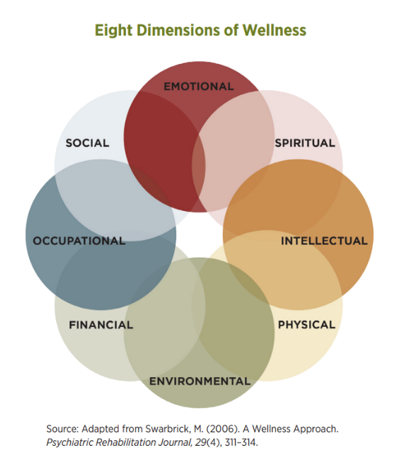
SAMHSA’s Promoting Wellness Guide indicates Eight Dimensions of Wellness: Emotional, Spiritual, Intellectual, Physical, Environmental, Financial, Occupational, and Social. Prevention Specialists can engage community partners in methods of incorporating mental wellness to increase inclusiveness and access to mental wellness in the community.
Taking care of our individual needs is also important. We often hear about self-care in the mental health field and the effects on our emotional and physical well-being. Mental Wellness Month is a great time to adopt new self-care practices in your life, such as setting aside time daily for a relaxing activity or starting a gratitude practice. The National Institute of Mental Health has a list of tips and resources for self-care you can use.
For additional resources on Mental Wellness and practical methods of incorporating wellness into your community, you can check out the National Wellness Institute and the Global Wellness Institute. The California Department of Public Health has Mental Wellness has social media templates that your organization can share with tips on how to promote individual mental well-being.