
ABHPC Prevention Pathways Monthly Bulletin for August 2025
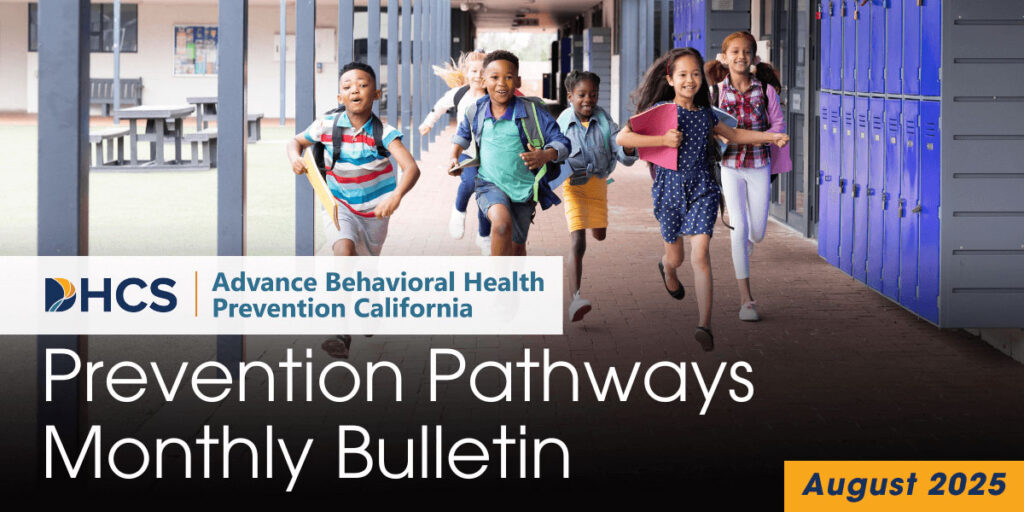
National Back to School Month
August is National Back to School Month, a crucial opportunity to reinforce prevention efforts in school settings across California. Research highlights that schools play a central role in both risk and protective factors related to youth substance use including peer norms, availability of substances, and connections to caring adults. Prevention professionals can partner with schools and districts to increase prosocial engagement, support staff in recognizing early signs of substance use, and promote positive school bonding during this transition period.
Below are resources for learning more about school-based behavioral health prevention:
- California School-Based Health Alliance has tips on evidence-based school services for prevention.
- Substance Abuse and Mental Health Services Administration’s School and Campus Health page hosts data and information on programs such as Trauma-Informed Support Services and Talk. They Hear you.
- The United States Department of Education has an archive of webinars on substance use prevention and mental health as well as key knowledge areas for students and parents and guardians.

Youth in Primary Prevention
Youth engagement is a core tenet of successful primary prevention. Whether through peer leadership, interactive workshops, or youth advisory groups, involving and elevating the efforts of young people enhances relevance and increases impact. Connecting youth voices to substance use prevention also fosters empowerment and ownership of healthier choices. By authentically committing to youth-centric prevention efforts, organizations can build successful programming.
Fortunately, there are plenty of resources and example programs that can support prevention
professionals in successful youth engagement. The Youth and Young Adult Engagement Toolkit from Healthy Transitions Oregon explores core elements of meaningful youth engagement in behavioral health initiatives. For online engagement, the National Council for Mental Wellbeing has published a Social Media Tip Sheet. Authentic communication about prevention is key for youth engagement – A Division for Advancing Prevention and Treatment and One Choice Prevention both have free toolkits to reference. You can also explore California-based programs such as Elevate Youth California, Dana Point High School’s “Save Our Students” initiative, and the California Friday Night Live Program for real-life examples of successful behavioral health prevention with youth.
National Fentanyl Prevention and Awareness Day
August 21st is National Fentanyl Prevention and Awareness Day. This day highlights the prevalence and danger of illicit fentanyl, its impact, and ways to reduce risk. Statewide initiatives across California to address fentanyl include Governor Newsom’s “Master Plan for Tackling Fentanyl,” mandatory naloxone access on college campuses, and expanded fentanyl education in school curricula. Youth centered-messaging including Song for Charlie, and Coast’s “Speak Up on Fentanyl” videos aim to support prevention messaging for youth.
California’s Department of Health Care Services’ Naloxone Distribution Project allows entities including first responders, schools, tribal entities, community-based organizations, and others to apply for naloxone and/or fentanyl test strips shipped directly to their address. The National Fentanyl Awareness Day 2025 Toolkit has graphics, FAQ sheets, and social assets that you can use to support program collaboration with schools, parents, and faith or youth organizations.
International Overdose Awareness Day
International Overdose Awareness Day (IOAD) on August 31 commemorates lives lost to overdose while promoting prevention and de-stigmatization. This year’s theme “One big family, driven by hope” is a reminder that collaborative action and support are powerful. Organizations host events offering naloxone and fentanyl test kits, resource fairs, testimonials, memorials, and grief support in commemoration of IOAD. Below are some ideas for how you and your organization can get involved in IOAD:
- Explore local events, like Santa Clara/San José’s 2025 International Overdose Awareness Day.
- Develop campaigns for your community. IOAD’s official website and the Centers for Disease Control are a great place to start!
Check out resources from the National Harm Reduction Coalition or the Drug Enforcement Administration to stay educated on current substance use/misuse trends.
DHCS Announcements and Updates
Introducing: The Mentored Internship Project (MIP) Toolkit
The Behavioral Health Workforce Development (BHWD) Initiative has concluded its impactful work, and we are excited to share a valuable resource born from its success: the Building the Behavioral Health Workforce: A Toolkit for Mentored Internship Programs.
This comprehensive toolkit is designed to help behavioral health organizations across California create or expand their own effective Mentored Internship Programs (MIPs). It captures the incredible lessons learned and practical strategies from the BHWD MIP project (2021-2025), which saw state and federal dollars invested to establish paid, mentored internship programs at 166 providers statewide.
Why is this toolkit essential for your organization?
- Equity in Workforce Development: Learn how to launch a paid internship program that ensures individuals from all socioeconomic backgrounds have the opportunity to engage in vital behavioral health work, broadening access to the workforce.
- Practical, Proven Guidance: Whether you’re starting from scratch or enhancing an existing program, this toolkit offers customizable tools and real-world examples to help you plan, attract, train, and retain top talent.
- Deepen Workforce Connections: Discover how mentorship, a core component of these programs, builds vital collegial connections from day one, helping interns navigate the challenging behavioral health field and deepening their commitment.
- Adaptable for Diverse Needs: This resource is designed to benefit a wide range of organizations, including small and large treatment providers, peer programs, and county behavioral health departments.
The original MIP project was incredibly successful, onboarding over 5,600 interns and fostering hundreds of new partnerships, significantly increasing skill and capacity within the workforce. This toolkit enables other organizations to apply these strategies to their own MIPs, fostering the next generation of behavioral health professionals.
Access the MIP Toolkit here:
https://www.workforce.buildingcalhhs.com/introducing-the-mentored-internship-project-toolkit/
Let’s continue to strengthen California’s behavioral health workforce together!
If you are interested in having your organization or prevention program featured in an upcoming bulletin, email Olivia Shrago at oshrago@cars-rp.org to get started!