
ABHPC Prevention Pathways Monthly Bulletin for April 2024

National Minority Health Month
The American Public Health Association (APHA) designed National Public Health Week (NPHW) to spread awareness of what public health encompasses and how to strengthen different facets. This year, the theme for NPHW is “Protecting, Connecting and Thriving: We Are All Public Health” and events run from April 1st – 7th. The theme highlights how communities thrive when public health needs are being met, and how our relationships within the community play an important role in public health.
Each day of NPHW focuses on a specific aspect of public health: Monday is civic engagement, Tuesday is health neighborhoods, Wednesday is climate change, Thursday is new tools and innovations, Friday is reproductive and sexual health, Saturday is emergency preparedness, and Sunday is the future of public health. There are fact sheets for each day that include actionable ways to engage in public health individually, at a community/neighborhood level, at a city/state level, and a national level. You can also view fact sheets from previous years’ NPHW.
The APHA website provides toolkits for hosting public health events in a variety of settings. They have extensive resources and guidelines on advocacy for public health including templates for contacting members of Congress about public health priorities. All of these valuable linked resources are available after NPHW ends – so we encourage you to check them out!

Arab American Heritage Month
Arab American Heritage Month was launched in 2017, and April was officially declared National Arab American Heritage Month (NAAHM) by presidential proclamation in 2023. This year, the theme for NAAHM is “Celebrating Arab American Resilience and Diversity.” Approximately 3.7 million Arab Americans live in the United States, with over 530,000 living in California.
Although there is limited data on mental health discrepancies for Arab Americans in the general population, there is evidence to show that discrimination, current events, and travel restrictions contribute to stress and trauma for Muslim and Arab Americans. Arab American college students experience higher rates of depression and anxiety than white students, and research shows that refugees appear to have poorer mental health outcomes than immigrants and United States-born Arab Americans. Mistrust of non-Arab providers and perceived discrimination in health care create a barrier to adequate behavioral health treatment as well as lack of representation in health care and research. Arab America has ideas to address these barriers to health equity, including language and lack of cultural humility, in their article “Bridging the Gaps in Health Care Access for Arab Americans.”
Arab American members of the California Teachers Association recognized NAAHM by discussing the importance of empathy, representation, and equity. Arab America Foundation has resources for learning more about Arab American identity and culture. They have published ideas for how to celebrate NAAHM into the workplace, such as hiring a chef for an Arab cooking workshop or incorporating inclusive practices for people of different faiths. You can learn more about NAAHM events and find educational resources from Arab America Foundation here, or celebrate NAAHM by learning about Arab American artists from The Smithsonian.
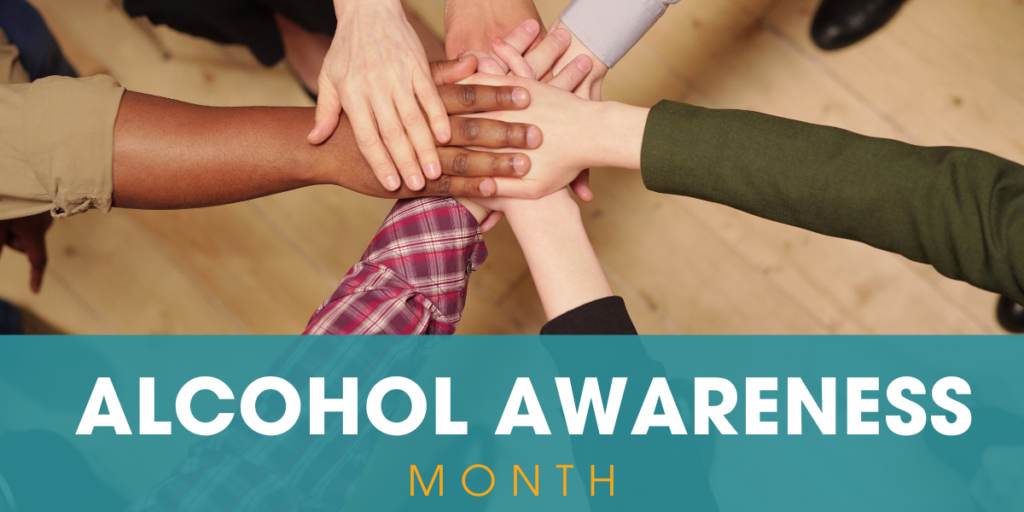
Alcohol Awareness Month
Alcohol Awareness Month originated in 1987 as an awareness campaign run by the National Council for Alcoholism and Drug Dependence. This month of recognition aims to break the stigma around seeking help for alcohol use disorder and spread information on the impact of alcohol misuse on public health and individuals. Organizations across California and the United States use Alcohol Awareness Month as an opportunity to implement alcohol prevention efforts. The National Institute on Alcohol Abuse and Alcoholism, part of the National Institutes of Health, released resources for engaging youth in alcohol awareness and prevention and general resources for professionals and communities including research and screening tools.
Healthy People 2030’s objectives include reducing misuse of drugs and alcohol. Goals include reducing binge drinking among people 21 and older and under 21, reducing past month alcohol use in adolescents, and reducing the proportion of people who had alcohol use disorder in the past year. You can read more about the evidence-based resources that fuel these efforts here.
State-wide alcohol misuse and harm prevention efforts are being led by California’s Department of Alcoholic Beverage Control. Those efforts include proposing legislation and regulations, requiring Responsible Beverage Service training for servers and bartenders, business inspections, and more.
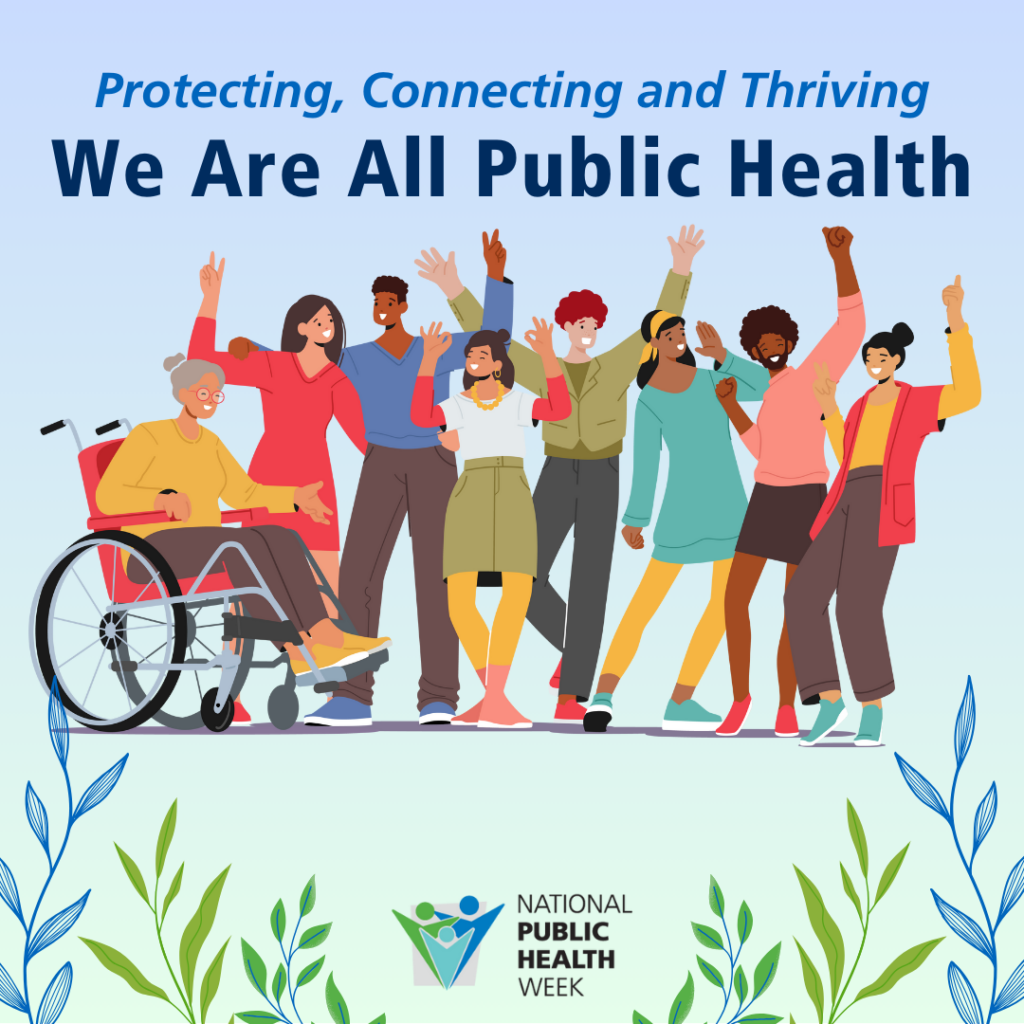
National Public Health Week
The American Public Health Association (APHA) designed National Public Health Week (NPHW) to spread awareness of what public health encompasses and how to strengthen different facets. This year, the theme for NPHW is “Protecting, Connecting and Thriving: We Are All Public Health” and events ran from April 1st – 7th. The theme highlights how communities thrive when public health needs are being met, and how our relationships within the community play an important role in public health.
Each day of NPHW focuses on a specific aspect of public health: Monday is civic engagement, Tuesday is health neighborhoods, Wednesday is climate change, Thursday is new tools and innovations, Friday is reproductive and sexual health, Saturday is emergency preparedness, and Sunday is the future of public health. There are fact sheets for each day that include actionable ways to engage in public health individually, at a community/neighborhood level, at a city/state level, and a national level. You can also view fact sheets from previous years’ NPHW.
The APHA website provides toolkits for hosting public health events in a variety of settings. They have extensive resources and guidelines on advocacy for public health including templates for contacting members of Congress about public health priorities. All of these valuable linked resources are available after NPHW ends – so we encourage you to check them out!