
ABHPC Prevention Pathways Monthly Bulletin for May 2026

Advanced Behavioral Health California Update
There are two (2) exciting events scheduled in May 2026 for Prevention Professionals. Stay tuned for announcements and registration!
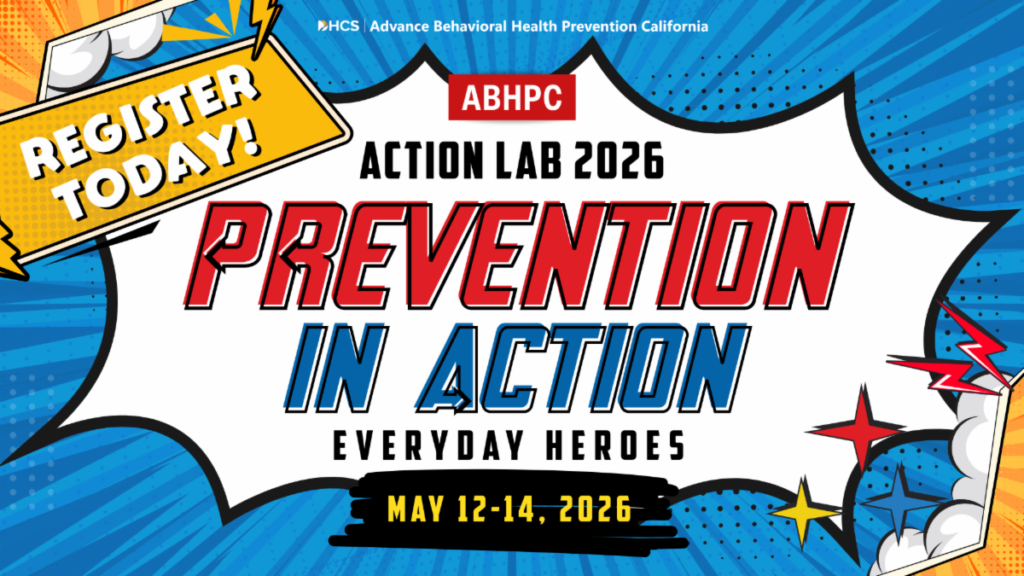
Registration is now open for the 2026 ABHPC Action Lab Prevention in Action: Everyday Heroes. This year’s Action Lab will be held May 12-14th, 2026 in Anaheim, CA. For more information and ongoing updates, check out our website.
Mental Health Awareness Month
May is Mental Health Awareness Month. This month encourages people to have open conversations about mental health and healing to break down stigma around help-seeking. An estimated one in five adults in the United States have a mental health disorder. In addition to stigma, barriers for accessing mental health treatment include financial reasons or insufficient health insurance, geographic barriers, and lack of community-based mental health interventions. Mental Health Awareness Month identifies ways individuals, communities, and programs can address mental health needs through individual and collective action.
Mental Health America founded Mental Health Awareness Month in 1949, and has identified “More Good Days, Together” as this year’s theme. Their 2026 Action Guide outlines activity ideas, themes, shareable media resources, and an open virtual wellness event.
The Substance Abuse and Mental Health Services Administration (SAMHSA)’s theme for this year, “See the Person. Support the Journey.”, comes with key themes for each week of the month. Their toolkit provides resources and content for each weekly theme:
- Week 1 (May 1 – 8) Understanding Mental Illness, Including Serious Mental Illness: Awareness Leads to Compassion
- Week 2 (May 11 – 15): Early Support Matters: Recognizing Signs in Children and Youth
- Week 3 (May 18 – 22): Words Matter and Words Can Heal
- Week 4 (May 25 – 29): Supporting Loved Ones: Connection Is a Powerful Form of Care

National Children’s Mental Health Awareness Day
May 7th is National Children’s Mental Health Awareness Day. This day of recognition occurs annually in May as part of Mental Health Awareness Month. Approximately one in five children ages 3 to 17 have been diagnosed with a mental health condition, with rates higher in children ages 12 to 17. Anxiety, depression, and behavior disorders are the most common diagnoses for children. Factors such as social media, bullying, pressures and expectation, technology, and school are cited as contributing factors to rising mental health concerns. Although reported substance use among youth has remained low and stable over the past five years, it is important to continue monitoring and addressing youth mental health to prevent a future increase in substance use.
Efforts are happening across California to support youth mental health. The California Department of Health Care Services Children and Youth Behavioral Health Initiative provides free mental health services for schools, youth, and families, including evidence-based services that are available virtually. The California Health and Human Services Agency has a directory of mental health programs for youth, families, and schools.
For National Children’s Mental Health Awareness Day resources, statistics, and ideas, check out SAMHSA’s digital toolkit.

National Prevention Week
National Prevention Week is May 10-16th. This week encourages people and programs to celebrate their prevention successes and bring awareness to the field of prevention. SAMHSA has an extensive National Prevention Week toolkit for individuals, communities, and programs to support National Prevention Week events, from planning and promotion through keeping momentum after an event.
If you or your program would like for your National Prevention Week efforts to be featured in the ABHPC Monthly Bulletin, reach out to Olivia Shrago at oshrago@cars-rp.org.
Community Spotlight: Kern Behavioral Health & Recovery Services Prevention Team
Guest Contributors:
Valeria Rojas Martinez, She/Her, Licensed Clinical Social Worker, Behavioral Health Unit Supervisor.
Kern Behavioral Health & Recovery Services (KernBHRS) provides specialty behavioral health services to Medi-Cal recipients and uninsured individuals throughout Kern County. The department delivers a comprehensive continuum of care designed to address the diverse needs of the community, guided by its mission to promote hope, healing, and recovery through collaboration. Within KernBHRS, the Prevention/Friday Night Live Team plays a vital role in advancing community awareness and education. The team conducts outreach and public education initiatives aimed at preventing alcohol and drug misuse among students, parents, educators, and professionals.
As part of these efforts, the Prevention Team, in collaboration with Drug Free Kern—a coalition in Kern County dedicated to reducing the impact of substance and alcohol misuse—is currently hosting community screenings across Kern County of La Estrella, a bilingual short film set within a Latino community. The film fosters open dialogue around grief, love, and substance use prevention. Produced through Song for Charlie’s La Nueva Drug Talk program in partnership with Latino families, as well as medical and mental health professionals, La Estrella reflects culturally relevant perspectives on prevention, family dynamics, and the disproportionate impact of fentanyl and counterfeit prescription pills on Latino communities.
These screenings are designed to create a safe, inclusive environment where families can engage in meaningful conversations and access critical information about the risks associated with counterfeit pills and fentanyl. Each event includes a guided discussion featuring local experts, such as addiction medicine physicians, individuals with lived experience, and state opioid response patient navigators. Participants are provided with resources for treatment, Narcan, and practical tools to support ongoing conversations at home, helping to reduce stigma and encourage early intervention.
What’s the latest from DHCS
Request for Applications for California county and city local health jurisdictions
The California Department of Public Health, Substance and Addiction Prevention Branch’s (CDPH-SAPB), Youth Cannabis Prevention Initiative has released a Request for Applications for California county and city local health jurisdictions to implement evidence-based public health intervention and community-defined evidence practices that establish or expand local activities in the areas of substance use education and prevention, with a focus on cannabis prevention among California youth and young adults.
CDPH-SAPB will award funding to five local health jurisdictions to develop, implement, and evaluate cannabis education and prevention (optional: other substances) activities focused on youth in their communities.
Please visit the Youth Cannabis Prevention Initiative to learn more information about the Initiative and its work. For more information, contact cannabis@cdph.ca.gov.
Request for Applications for the California Services to Science Academy Cohort 2.0
On April 17, 2026, the Department of Health Care Services released a Request for Applications for $820,000 to solicit applicants to participate in the California Services to Science Academy (CSSA) Cohort 2.0. Non-profit youth-serving community-based and tribal organizations and counties directly implementing Substance Use Prevention, Treatment, and Recovery Block Grant funded prevention programs can apply up to $102,500, to participate in the CSSA Cohort 2.0, a 15-month technical support grant designed to assist substance use disorder (SUD) prevention providers generate credible evidence of their locally developed and innovative prevention interventions. The CSSA Cohort 2.0 will expand the availability of culturally relevant and linguistically appropriate SUD prevention interventions to meet California’s diverse behavioral health needs. For more information and to apply by the deadline of May 29, 2026, please visit the Substance Use Prevention Evidence-Based Resource.
New CDC Data Dashboard Shows Emerging Fentanyl and Polysubstance Use Trends
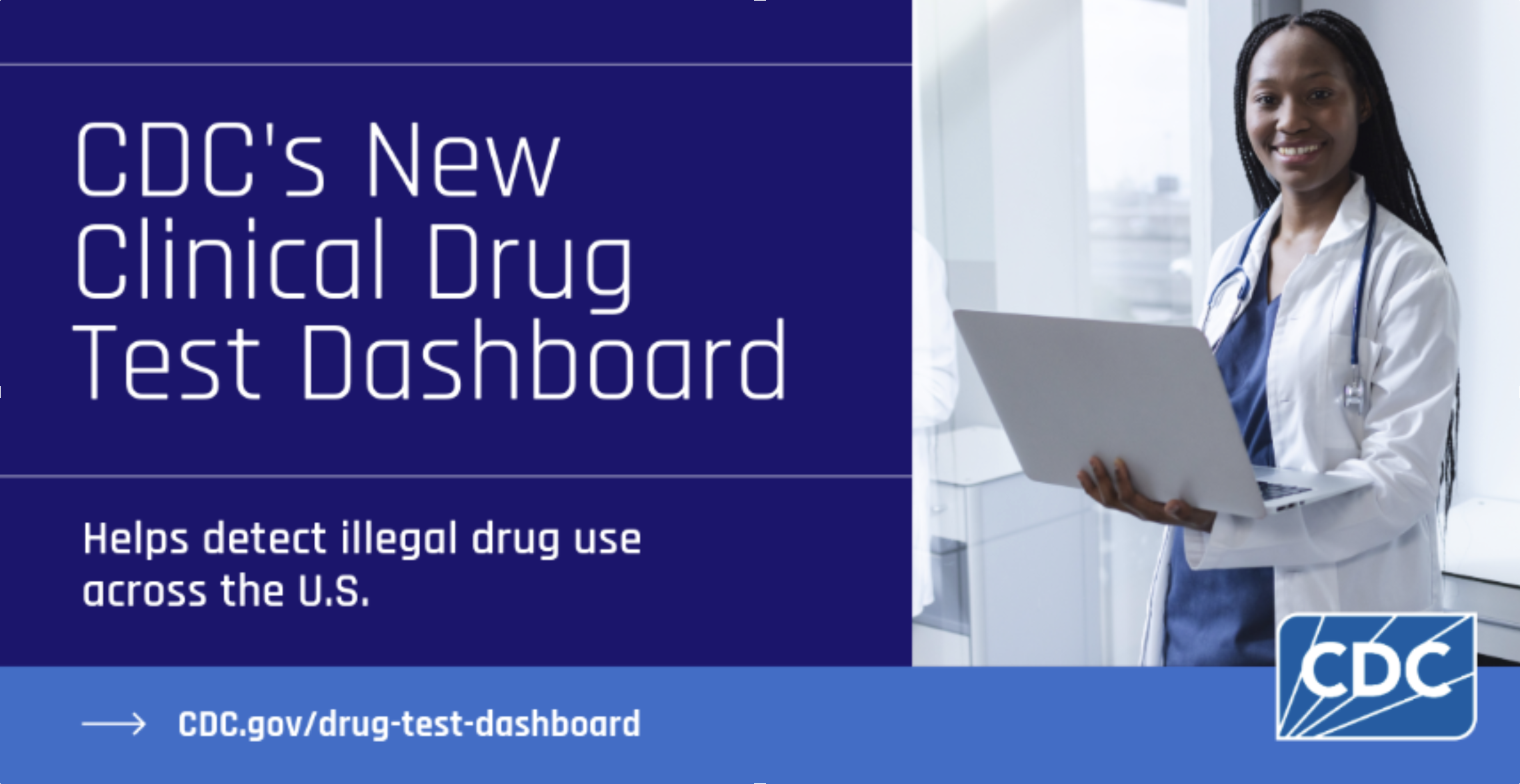
CDC’s Division of Overdose Prevention recently launched the Clinical Drug Test Dashboard. This new interactive tool provides actionable data and timely insights into trends from fentanyl, heroin, cocaine, and methamphetamine, with a focus on the primary drivers of overdose deaths.
The dashboard shows results from clinical urine drug tests ordered as part of routine care for adults diagnosed with substance use disorders. While these data do not represent drug use rates in the U.S. population, the large volume of test results can help identify national and regional changes in drug use and co-use more quickly than many traditional data sources.
Learn How to Use the Dashboard
Register for our webinar on Thursday, June 11 at 1:00 p.m. EDT to walk through the dashboard, hear key findings, and get your questions answered. A recording will be posted online following the webinar.
The Dashboard Offers:
- Interactive visualizations showing available U.S. data at national and regional levels.
- Results for more than 60,000 specimens tested each quarter. Data are available from October 2023 to December 2025, representing over 650,000 specimens.
- A Key Findings page with insights and summaries from the most recent data reports.
- Clear background information on clinical urine drug tests and data collection methods.
- Guidance on common mistakes to avoid when interpreting data.
Drug tests were conducted by Millennium Health, an accredited laboratory that supports clinicians in monitoring prescription medications, detecting illegal drug use, and assessing treatment effectiveness.
The Clinical Drug Test Dashboard will be updated quarterly as new data become available. Explore the dashboard today to see what’s changing and how the data can support your overdose prevention work.
Clinicians should watch for signs of medetomidine exposure and severe withdrawal symptoms in patients who present to an emergency department after a suspected overdose. This is especially important in regions where medetomidine has been detected in the drug supply. Collaboration between public health agencies, medical professionals, and community organizations is essential to mitigate risks and provide appropriate care for affected individuals.
Be prepared. Review the Health Alert Network (HAN) for medetomidine-related recommendations for health departments, clinicians, hospitals, laboratories, and people at risk for overdose.
Additional Resources:
Visit us at:
If you are interested in having your organization or prevention program featured in an upcoming bulletin, email Olivia Shrago at oshrago@cars-rp.org to get started!