
ABHPC Prevention Pathways Monthly Bulletin for May 2025

Asian American and Pacific Islander Heritage Month
May is Asian American and Pacific Islander (AAPI) Heritage Month, an annual celebration of the cultures, lives, and contributions of Asian Americans, Native Hawaiians, and Pacific Islanders. California is home to approximately 6 million AAPI residents, which is about 15.5% of California’s population. It is important to note that the term AAPI encompasses numerous ethnicities, languages, cultures, and countries of origin, and it is not always appropriate to “combine” these populations when creating prevention services or conducting research.
Although Asian Americans have lower substance rates than the national average, it is estimated that only 3.3% of Asian Americans who need substance misuse treatment receive it. Barriers to treatment vary by individual experience but can include cultural norms that discourage conversations around behavioral health or prioritize help-seeking from personal contacts rather than professionals, language barriers, and lack of awareness of services. These combined with other social drivers of health such as access to healthcare and economic stability make it challenging for people to receive necessary care. The “model minority myth”, a pervasive set of stereotypes used to categorize all Asian Americans, can perpetuate stigma around help seeking and ignores the real, harmful experiences of systemic racism for AAPI communities.
It is crucial to incorporate culturally relevant practices in each step of substance use/misuse prevention program development and implementation. Stop the Addiction Fatality Epidemic Project has a list of substance use/misuse and mental health resources for AAPI communities, including organizations such as the National Asian Pacific American Families Allied for Substance Awareness and Harm Reduction and National Queer Asian Pacific Islander Alliance, and educational resources from the Asian American Psychological Association. California-based efforts are available as well, such as the Los Angeles based Asian American Drug Abuse Program.

National Children’s Mental Health Awareness Day
National Children’s Mental Health Awareness Day occurs annually in May. The day acknowledges the importance of recognizing mental health concerns and promoting positive mental health for youth. It is critical to start mental wellness practices early as children begin developing social, relational, and emotional regulation skills.
Adverse Childhood Experiences, or ACEs, are events that occur in a person’s childhood such as witnessing or experiencing violence, neglect, and instability. The links between ACEs and behavioral health needs such as mental health diagnoses and substance use disorders are well documented. This understanding can help the fields of public health and prevention to identify and address ACEs earlier on and shift to a more holistic approach to individual behavioral health.
Less frequently discussed but just as important are Positive Childhood Experiences (PCEs). These are protective experiences and skills such as being taught healthy relationship skills, connections with caring adults, and safety. Increasing PCEs can reduce the likelihood or severity of behavioral health concerns later in life. The Centers for Disease Control’s Preventing Adverse Childhood Experiences through Data to Action funds programs that use health equity data to address social drivers of health. Similarly, Healthy people 2030 has a variety of goals related to addressing ACEs and PCEs such as eliminating low food security for children, increasing resiliency in children and adolescents, and reducing suicide attempts. Starting prevention early, identifying PCEs and ACEs, and using research to drive prevention and intervention can support children’s mental health.

Jewish American Heritage Month
May is Jewish American Heritage Month. This month of recognition was established in 2006 by presidential proclamation to celebrate and honor the achievements and contributions of Jewish Americans throughout United States history. This month provides an important opportunity to learn about the roots and diverse experiences of the Jewish community, as well as their influence across fields such as civil rights, science, arts, and education.
Below are resources and ideas for ways you can celebrate Jewish American Heritage Month:
- Engage with Jewish American Heritage Month through Jewish American Heritage Month website, which has a variety of resources including social media graphics, lessons for youth, facts sheets, and more.
- Explore the National Archives website through videos and records of Jewish American history.
- Learn about Jewish American history and the story of Louis Rose in San Diego, California at the California State Parks website.
Mental Health Awareness Month
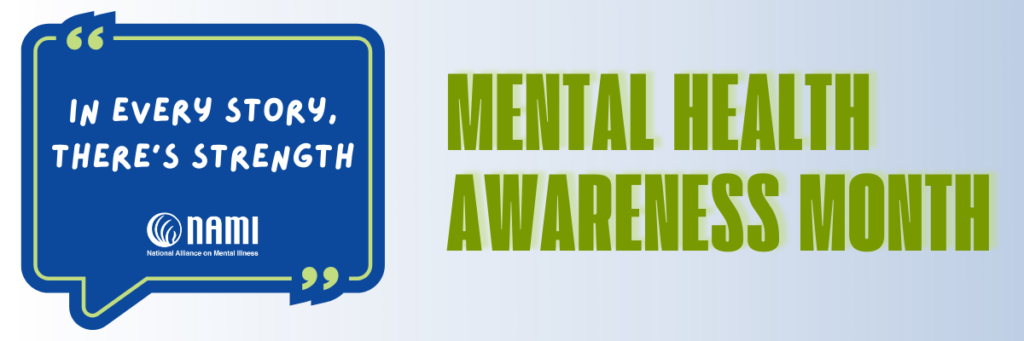
Mental Health Awareness Month occurs annually in May. This year, the theme is “In Every Story, There’s Strength.” By sharing stories of mental health and promoting wellbeing we can break down codes of silence and encourage dialogue and help-seeking behaviors. The National Alliance on Mental Illness (NAMI) has developed a media toolkit including shareable social media posts and guidelines for creating videos to support the campaign. People who submit their mental health stories to NAMI have the chance to be published through their channels.
Mental Health Awareness Month encourages people to be intentional about working on their own mental wellbeing. Mental Health America has created an action guide for Mental Health Month with ideas for how to take care of yourself and how to support mental health for others. You can also explore Substance Abuse and Mental Health Administration’s Promoting Wellness Guide to Community Action to explore how you can promote wellness in your community.

National Prevention Week
May 11-17, 2025 marks National Prevention Week. This week of recognition and action is organized by the Substance Abuse and Mental Health Administration (SAMHSA) and encourages organizations, communities, and individuals to engage in substance use prevention and mental health promotion. SAMHSA has created toolkits and ideas for how people can get engaged with National Prevention Week. Individuals and organizations can create social media posts with the hashtag #MyPreventionStory to share their experiences with mental health and substance use/misuse prevention and share upcoming events.

Strategic Prevention Framework (SPF): Evaluation
The Strategic Prevention Framework (SPF) was created by the Substance Abuse and Mental Health Services Administration to provide prevention planners with a guide to comprehensively understand and address substance use and misuse in their communities. The steps of the SPF include assessment, capacity, planning, implementation, and evaluation. Cultural responsiveness and sustainability are woven throughout each step of the SPF.
Evaluation is the final step of the SPF. The goal of implementing prevention strategies is to create change. So, it is important to measure change to see if you’re getting the outcomes you intended. Good evaluation helps us monitor what we’re doing, decide whether what we’re doing is actually working, and whether we should keep doing it. Evaluation is also used to ensure efforts meet funding requirements and the best interest of relevant stakeholders and rights-holders.
There are two main types of evaluation in the SPF: process evaluation and outcome evaluation. Process evaluation looks at whether the planned tasks or steps occurred. This is a helpful step to identify barriers and ways to address those moving forward. Outcome evaluation looks at what happened as a result of the implemented program – what changes happened, and how do those changes compare to the intention of the program. Ongoing evaluation is crucial in implementing successful prevention programming.
DHCS Announcements and Updates
The California Department of Public Health Substance and Addiction Prevention Branch created outreach and education materials to raise awareness and support efforts in prevention alcohol-related harms. Organizations may use these materials as references for their own initiatives and/or share them within their networks to promote learning and collaboration across communities.
SAVE THE DATE: California Behavioral Health Association’s (CBHA) Spring Behavioral Health Policy Forum – June 18, 2025. This in-person event will bring together behavioral health professionals, policymakers, and community-based organizations from across California to discuss fiscal sustainability, workforce challenges, innovation, and system change. Attendees will also receive critical updates on policy developments impacting behavioral health services, including PAGA, cybersecurity, LA wildfire resources, and CCBHCs. CBHA has put together a promotional toolkit with newsletter and social media messaging to make it easy for you to share this event with your networks. Advance registration is required. For more information, please visit the CBHA events page.
If you are interested in having your organization or prevention program featured in an upcoming bulletin, email Olivia Shrago at oshrago@cars-rp.org to get started!