
ABHPC Prevention Pathways Monthly Bulletin for June 2026

Advanced Behavioral Health California Update
There are eight (8) exciting events scheduled in June 2026 for Prevention Professionals. Stay tuned for announcements and registration!
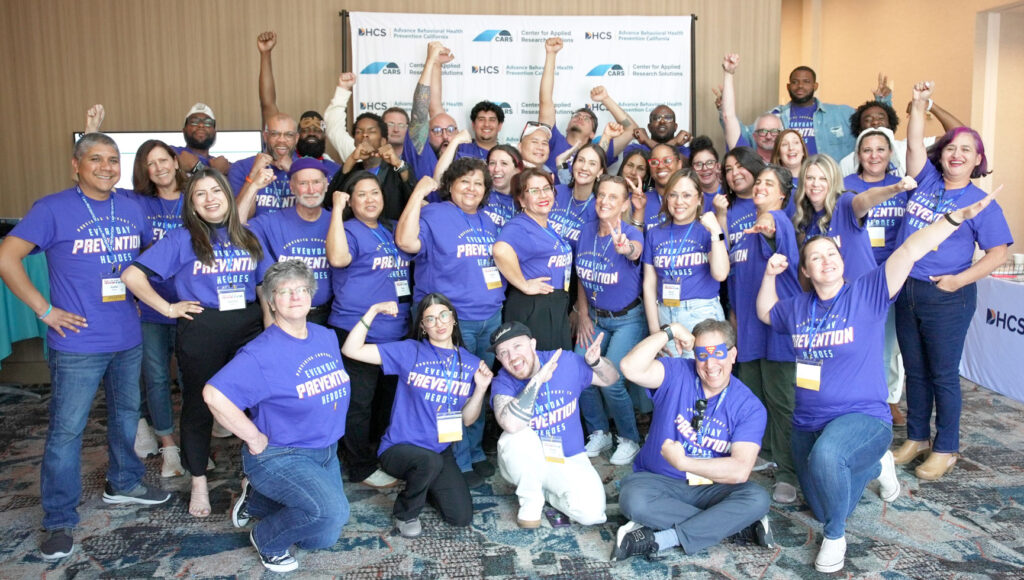
2026 Action Lab: Prevention in Action: Everyday Heroes
We had a great turnout at last month’s ABHPC Action Lab with 206 in-person attendees and 90 online attendees. The 30 offered sessions gave attendees opportunity to learn key prevention concepts and network with professionals across the field. We hope to see you at next year’s Action Lab – stay tuned!
Reminder: The ABHPC Learning Management System is Now Live! Don’t forget to take advantage of our updated, on-demand training courses to see some of what ABHPC has to offer. Continuing Education Hours are available upon course completion.
Post-Traumatic Stress Disorder Awareness Month
June marks Post-Traumatic Stress Disorder (PTSD) Awareness Month. PTSD is a mental health condition where an individual who has experienced or witnessed a traumatic event has symptoms such as:
- Re-experiencing the trauma through flashbacks, nightmares, or repeatedly thinking about the trauma.
- Avoiding reminders of the trauma or being unable to speak about the trauma.
- Changes in mood and thoughts such as depression or memory loss.
- Feeling reactive or constantly on alert, jumpy, and angry.
According to the National Institute of Mental Health, an estimated 3.6% of adults stated having PTSD in the past year. The rate among adults was higher for females than for males and higher in veterans than civilians. Individuals with PTSD are two to four times more likely to meet the criteria for a substance use disorder diagnosis than those who do not have PTSD. This high rate of co-morbidity necessitates concurrent treatment and prevention efforts that address both PTSD and substance use/misuse.
For resources about PTSD, check out Substance Abuse and Mental Health Services Administration’s PTSD Awareness Month page, California Victim Compensation Board’s Trauma Recovery Centers, the California Department of Health Care Services’ Trauma Screenings and Trauma Informed Care Provider Trainings, and the California Department of Health Care Services’ Community and Crisis Care Programs Branch.

Prevention Models: Risk and Protective Factor Theory
The Substance Abuse and Mental Health Services Administration defines risk and protective factors as the “conditions in people’s lives that make them more or less likely to use alcohol, tobacco, or illicit drugs,” and thus, “influence the likelihood that an individual will develop a substance misuse or related mental health problem.” By assessing the risk and protective factors that are present within a community, preventionists can determine the most appropriate primary prevention programs, policies, and practices to implement at the local level to address risky behaviors that are associated with substance use.
Examples of risk factors include low income, unstable housing, food insecurity, and disconnected families or communities. Some examples of protective factors include access to healthcare, positive peer networks, and safe neighborhoods. This is not a comprehensive list but demonstrates the value of using a Shared Risk and Protective Factor (SRPF) approach.
An SRPF approach offers many strengths when implementing behavioral health prevention programs, policies, and practices. This is especially important in the context of evidence-based strategies; a difference can only be made if the prevention programs, policies, and practices selected are a good fit for both the priority problem behaviors and the underlying risk and protective factors that influence them. By understanding which risk and protective factors are shared between multiple problem behaviors of concern, preventionists can work to change and improve several problem behaviors at the same time through a comprehensive understanding of the issues and collaboration with other organizations with similar goals.
Prevention Models: Coalition Basics
Coalitions are a powerful tool in prevention. Through pooling together resources towards a common goal, community coalitions can have a broader reach and impact towards creating safer communities and reducing substance use/misuse risk.
Who should be included in a coalition?
Coalition membership should include major rightsholders, stakeholders, and groups and individuals who are empowered to contribute to meaningful community changes. Key groups and individuals to consider include, but are not limited to:
- Youth and Transition Age Youth
- Parents, caregivers, and families
- Community residents
- Businesses
- Schools
- Law enforcement
- Health care providers
- Social service providers
- Local groups
- State, local, and Tribal government agencies
- Media
What are the levels of collaboration?
Building relationships within coalitions takes time and effort to ensure members have equitable say in the processes and programs occurring. One framework of coalition involvement defines four stages: Networking, Cooperation, Coordination, and Full Collaboration. The four stages exist as a continuum with no “best” stage – each can be an appropriate fit depending on the member.
- Networking includes initial relationship development, information sharing, loosely defined roles, and limited decision-making.
- Cooperation is categorized by partnering without a formal agreement – roles may look more defined, resources are exchanged, and initial informal support between organizations and individuals is present.
- Coordination occurs when there is more mutual decision making and shared responsibility for program development and implementation.
- Full collaboration is the most formalized stage with clearly defined roles and responsibilities, written agreements between members, and equal decision making and pooled resources.
How are coalition relationships developed and established?
There are four stages of development that can help us conceptualize coalition dynamics and changing engagement: Forming, Storming, Norming, and Performing.
- Forming: groups first come together and get to know one another, often unsure about how the coalition process will look. It is important to begin defining shared goals and objectives at this stage.
- Storming: conflict may arise as members identify different goals, roles, and ideas. Through effective conflict resolution tactics, trust can be built and an agreed-upon path defined.
- Norming: progress becomes visible and a workflow is established. Conflict may continue to arise, but norms are established to address those and ensure members align with shared goals and strategies.
- Performing: members are engaged, and there are measurable wins and output seen as a result of coalition efforts. To keep momentum, it is important that wins are celebrated, there is internal mobility and growth opportunities, and challenges are discussed and addressed.
No two coalitions are the same, and there are plenty of resources and teachings available to support coalition building and functioning. Below are a few to further your understanding of coalitions:
- Coalitions 101: Getting Started
- Building and Sustaining Substance Abuse Prevention Coalitions
- Managing Coalitions Dynamics
- Levels of Collaboration
Community Spotlight: Orange County
Orange County has numerous initiatives dedicated to preventing substance use among youth. The following highlights shine a spotlight on the incredible youth-led work underway.
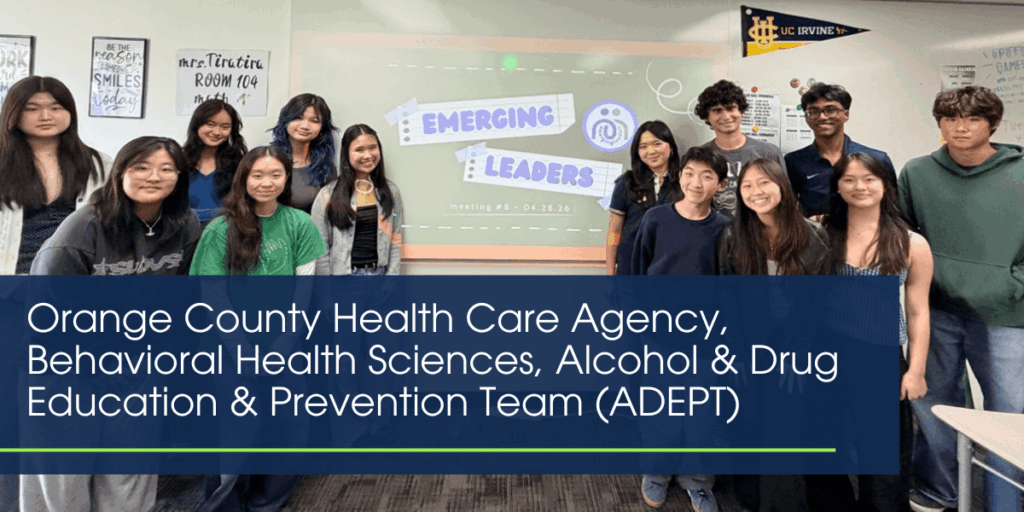
Orange County Health Care Agency, Behavioral Health Services, Alcohol & Drug Education & Prevention Team (ADEPT)
Guest Contributors:
Pauline Stauder, Program Supervisor and Sherryl Ramos, Health Educator.
For nearly five years, the County of Orange’s Alcohol & Drug Education & Prevention Team (ADEPT) has partnered with the Emerging Leaders Club at Los Alamitos High School to support the club’s mission of preparing its members to become positive, community minded leaders. Together, they have collaborated on a variety of student led prevention activities, including Red Ribbon Week events featuring interactive alcohol and drug prevention questions and a campus displayed banner promoting drugfree messages, as well as Mental Health Awareness Month outreach that encouraged wellness and selfcare during finals. A highlight of the partnership is the annual logo art contest, in which club members design artwork representing their “natural high” and promoting healthy alternatives to substance use; the winning design is then printed on a program identity item chosen by the members and serves as a reminder of positive choices. This longstanding collaboration continues to elevate youth involvement in substance use prevention and mental health promotion by providing hands on opportunities, creative projects, and leadership experiences that empower youth to influence their peers and champion a drugfree, wellness focused lifestyle.
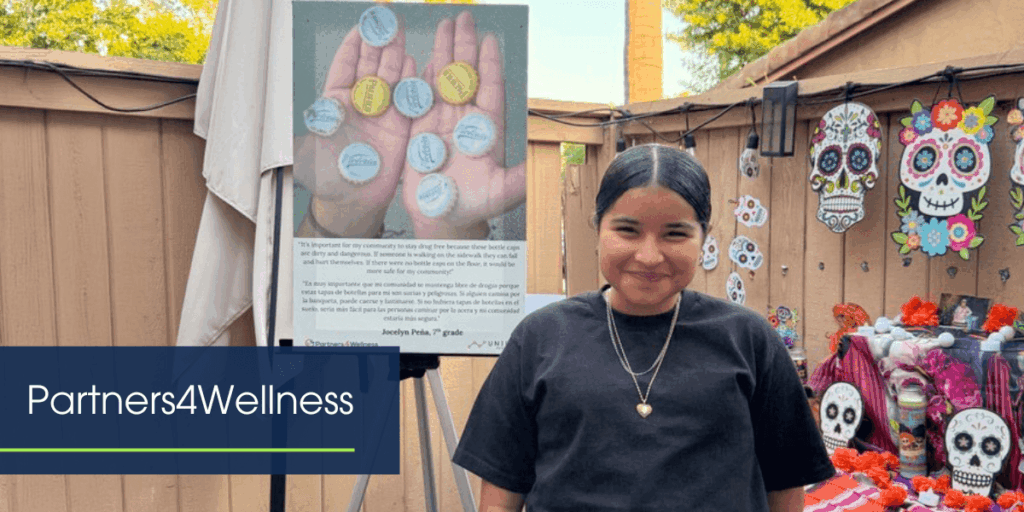
Partners4Wellness
Guest Contributors:
Marianne Mullen, Director of Prevention & Education.
In South Orange County, youth advocates are using storytelling to highlight both the strengths and challenges within their neighborhoods through PhotoVoice, a photojournalism prevention project led by Partners4Wellness in collaboration with youth leaders from Unidos SouthOC, a local agency focused on making positive changes in the community. Designed to promote the importance of maintaining a drugfree community, the initiative guided youth through capturing original photographs, engaging in reflective discussions, and crafting written narratives that deepened their understanding of their surroundings while building skills in communication, storytelling, and public speaking. This year, the program culminated in a PhotoVoice Showcase Event, where 13 youth leaders presented their canvases to families, neighbors, and local stakeholders, sharing personal stories behind their images and reinforcing a collective message: “A drugfree lifestyle is essential to building a positive, healthy future.” Their presentations highlighted how healthy choices contribute to safer environments, stronger relationships, and a more connected community. By uplifting youth voices and leadership, the initiative not only celebrated their creativity but also demonstrated the powerful role youth led storytelling plays in prevention, awareness, and shaping a healthier, more resilient community.
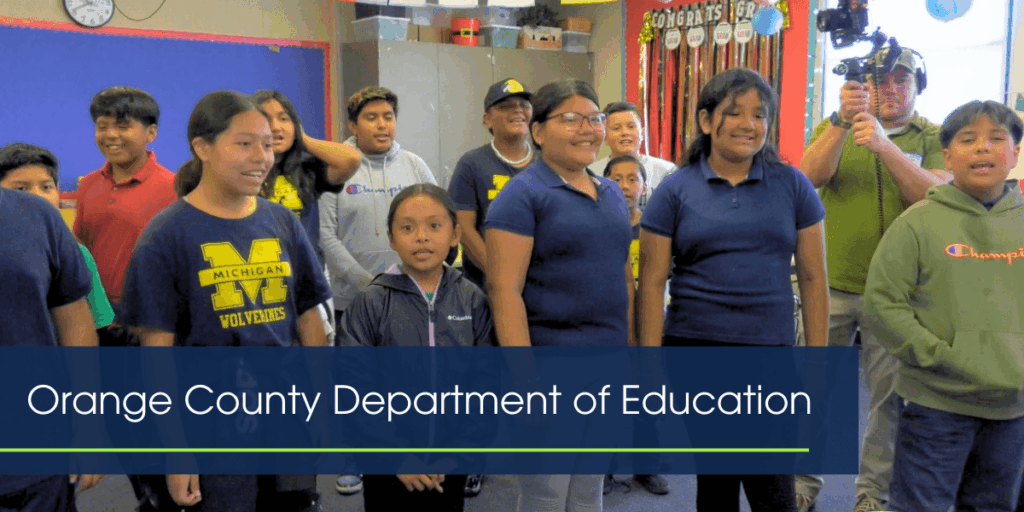
Orange County Department of Education
Guest Contributors:
Stephan Lambert, Coordinator, Prevention Education.
Staff from the Orange County Department of Education’s Youth Substance Use Prevention program recently partnered with fifth-grade students at Dr. Martin Luther King Jr. Elementary School in Santa Ana to transform prevention messaging into a creative music video. After completing the “Too Good For Drugs” evidence-based curriculum, students wrote and performed original lyrics that promoted healthy choices and refusal skills, using what they learned to craft a fun, youth-led project. With guidance from staff, the students blended creativity with prevention education, reinforcing key life skills while sharing a positive, drug-free message with their peers and the school community. Watch Video
Waymakers
Guest Contributors:
Christina Resendiz (she/her/hers), Program Manager, Project PATH (Positive Action Toward Health)
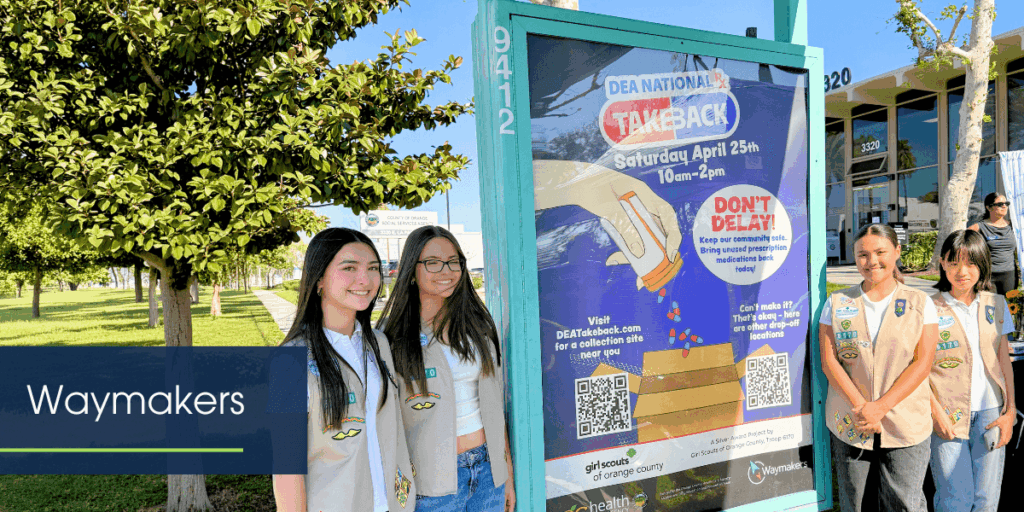
This year, Waymaker’s Youth Substance Use Prevention Project team supported Girl Scouts of Orange County Troop 6170 in their Silver Award project, a prestigious honor recognizing Cadettes who demonstrate leadership and a commitment to community service. Identifying the risks posed by unused prescription medications in homes—including potential misuse, accidental poisoning, and environmental harm—members of the troop focused their project on raising awareness about safe medication disposal and encouraging community participation in prescription drug take‑back programs. To promote this effort, troop members designed a transit shelter advertisement highlighting the upcoming Drug Enforcement Administration’s National Take Back event, which was displayed across 20 shelters in North Orange County. Through their thoughtful and proactive work, these scouts helped spread an important prevention message while making a meaningful impact on their community.
Orange County Department of Education, Friday Night Live
Guest Contributors:
Elke Petras (she/her), Youth Development Programs Coordinator
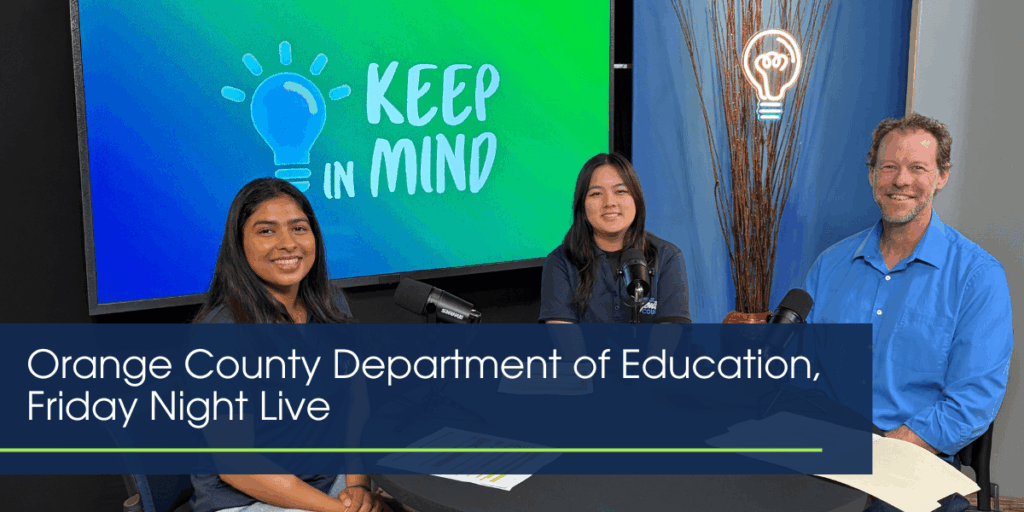
The Orange County Youth Council (OCYC) is launching Season 2 of its youth led Keep in Mind podcast series, which will be shared through social media and with schools countywide in support of substance use prevention activities. To develop the new season, OCYC students collaborated with staff from the Orange County Department of Education and invited expert guests to discuss current trends in substance use and other issues affecting their peers. Topics include Zyn nicotine pouches, opioids (fentanyl and Kratom), addiction and treatment resources for youth, Artificial Intelligence, and maintaining balance. Comprised of students representing Friday Night Live clubs from area high schools, the OCYC serves as an advisory group that provides a youth voice for countywide substance use prevention and mental health promotion, while also leading projects and activities that strengthen prevention efforts throughout Orange County. This year’s council is comprised of 21 students from 12 different high schools.
The podcast videos are available here.
What’s the latest from DHCS
Partnerships for Well Being Institute
DHCS and state System of Care partners are excited to invite you to the 2026 Partnerships for Well Being Institute (PWBI) from June 10-12, 2026, in Garden Grove, CA. California’s premier learning event for System of Care professionals, the PWBI is dedicated to advancing the health, safety and well-being of children and families. Presented in partnership with the California Department of Social Services, Department of Developmental Services, Department of Education, the Office of Youth and Community Restoration, and UC Davis Human Services, this event reflects a shared commitment to integrated care and cross-sector collaboration. For more information, please visit here.
Clearing the Air on Youth Cannabis Use 2026 Webinar Series
The Substance Use Prevention team at Santa Clara County of Public Health is hosting the 2nd annual cannabis webinar series throughout the month of June. You are invited to participate and encourage you to attend. Please sign up using the registration links below.
Into the Mouths of Children: Poison Control Trends in Cannabis Exposures of Children
Wednesday, June 3rd 10:00 – 11:00 AM PT
Presented by Dorie Apollonio, PhD, MPP. Professor, Clinical Pharmacy, UCSF School of Pharmacy.
Cannabis Conversations in the Clinic: What Pediatricians are Seeing in Youth
Wednesday, June 10th 10:00 – 11:00 AM PT
Presented by William Burroughs, MD, MPH. Assistant Clinical Professor, UCSF Pediatrics & Addiction Medicine.
What is Appealing to Youth? Teen Psychology and Cannabis Promotions
Wednesday, June 17th 10:00 – 11:00 AM PT
Presented by Alisa A. Pardon, PhD. Deputy Director, Prevention Policy Group, Public Health Institute.
For more information: sup@phd.sccgov.org
If you are interested in having your organization or prevention program featured in an upcoming bulletin, email Olivia Shrago at oshrago@cars-rp.org to get started!