
ABHPC Prevention Pathways Monthly Bulletin for January 2026

Advanced Behavioral Health California Update
There are five (5) exciting events scheduled in January 2026 for Prevention Professionals:
- Advocacy vs. Lobbying:
Tuesday, January 20th 10:00 a.m. – 11:30 a.m. PT - Fundamentals of the Strategic Prevention Framework:
Tuesday, January 20th 1:00 p.m. – 2:30 p.m. PT - Understanding and Navigating the Institute of Medicine Continuum of Care in Substance Use Prevention Services:
Thursday, January 22nd 2:00 p.m. – 3:30 p.m. PT - Mapping the Intersections: A Community-Centered Approach with a Shared Risk and Protective Factor Framework:
Tuesday, January 27th 1:00 p.m. – 2:30 p.m. PT - Finding the Threads: Mapping a Shared Risk and Protective Factor Approach in Community Centered Substance Use Prevention Efforts:
Thursday, January 29th from 10:00 a.m. – 11:30 a.m. PT

National Mentoring Month
Every January is National Mentoring Month, which highlights the critical role mentors have in shaping healthy pathways for others. In substance use prevention, mentoring can be a powerful protective factor for youth that helps build resilience, strengthen social connections, and navigate stressors without turning to substance use or misuse. Evidence shows that consistent mentorship improves school engagement, mental wellbeing, and decision-making skills, all of which directly support prevention goals. This is especially important for young people in underserved or high-risk communities.
California offers many opportunities to integrate mentoring into prevention initiatives for youth. Programs like the California Mentoring Partnership, and Elevate Youth California can serve as entry points for mentoring in prevention strategies. Prevention organizations can also train adult volunteers (such as parents/guardians, teachers, and community leaders) to serve as mentors by equipping them with trauma-informed, culturally responsive, and substance-use-awareness skills.
Mentoring is vital for career success as well. ABHPC offers a Prevention Pathways Mentorship program for behavioral health prevention professionals. Aimed to increase workforce retention as well as to provide networking and professional development opportunities, the mentorship program pairs entry-level or new prevention professionals with professionals who have a seasoned and diverse knowledge base in the field. Mentors and mentees are matched based on considerations and needs including areas of expertise/interest, lived experience, and cultural background/interests.
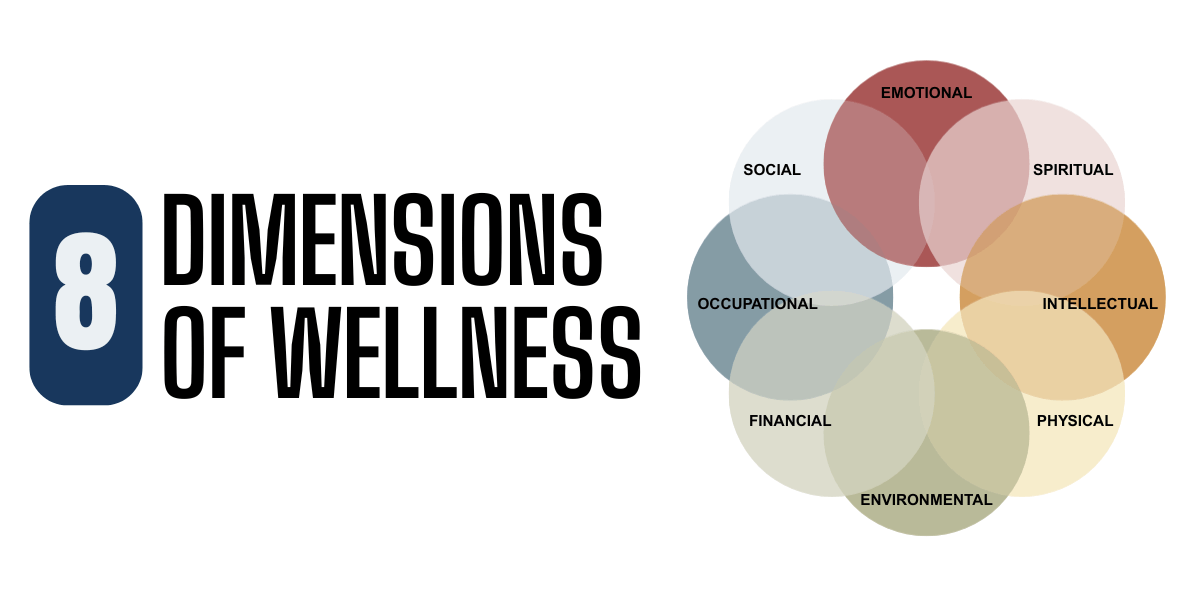
Substance Abuse and Mental Health Services Administration: Eight Dimensions of Wellness
Substance Abuse and Mental Health Services Administration (SAMHSA)’s Eight Dimensions of Wellness provide a holistic framework for individual wellbeing within SAMHSA’s wellness initiative. The eight dimensions are emotional, physical, social, occupational, intellectual, environmental, financial, and spiritual. These evidence-based dimensions serve as protective factors against substance use and misuse by promoting balance, connection, and resilience.
Prevention professionals can use the Eight Dimensions to design programs that meet the whole-person needs of priority populations. Integrating wellness activities such as mindfulness, financial literacy workshops, community events, and educational skill-building into prevention programming helps individuals build connections and develop healthy coping skills. These tools are also vital to reducing burnout for prevention professionals. SAMHSA’s publication “Creating a Healthier Life: A Step-By-Step Guide to Wellness” has steps for individuals to assess their wellbeing in each of the Eight Dimensions and practical strategies to build on these strengths. Through embedding wellness principles into everyday prevention work reinforces a strengths-based approach that empowers us to build healthier, more sustainable lives.
Community Spotlight: Nitrous Oxide Litter
Contributor: Katie Jo Slaughter, MA (she, her, hers) – Sr. Health Education Specialist and Humboldt County Prevention Coordinator with Humboldt County Department of Health and Human Services
Recreational nitrous oxide use is a significant health and wellness concern in Humboldt County. The Humboldt community has learned that nitrous oxide impaired driving can have tragic consequences for local families and community members. In January 2024, the Humboldt County Board of Supervisors directed Department of Health and Human Services (DHHS)-Public Health staff to address retail sales of recreational nitrous oxide through policy approaches. While for years there had not been conclusive data clearly articulating the significant short-term and long-term harms of nitrous oxide, two County Supervisors saw it firsthand in the communities they represent. They reached out to DHHS-Public Health to work together on this emerging health concern. The DHHS-Public Health Substance Use Prevention (SUP) program staff stepped into a lead role coordinating this work for Public Health.
SUP collaborated with community partners from October 2024-April 2025 to conduct a comprehensive retail landscape analysis of where recreational nitrous oxide products were being sold throughout Humboldt County. Our intrepid team visited 144 retail outlets and conducted mostly undisclosed “located in plain sight” store observations.
Our team found that recreational nitrous oxide products are readily available in most jurisdictions. We observed nitrous oxide products at 24 retail outlets, the majority (18) being smoke shops. Many of these retail outlets were located in close proximity to school sites and other youth-serving organizations. The retail outlets that sold recreational nitrous oxide products also sold a variety of flavored commercial tobacco and nicotine and products. Our team observed a wide variety of unregulated psychoactive products throughout the retail environment containing Kratom, psilocybin, stimulants, and Cannabidiol, or CBD, products.
Humboldt County is working on a unified policy approach between unincorporated Humboldt County and the seven city jurisdictions to address the availability of recreational nitrous oxide products. Since April 2025, Humboldt County and four city jurisdictions have passed recreational nitrous oxide sales ban ordinances. During the policy campaigns, the DHHS-Public Health team and community partners presented at City Council meetings about the analysis and the county’s nitrous oxide policy work. Our team has also presented this work to tribal partners like United Indian Health Services and the California Rural Indian Health Board and offered to support their efforts to address recreational nitrous oxide, where appropriate as community partners.
For more information on SUP’s ongoing environmental prevention work to address recreational nitrous oxide sales, please visit Recreational Nitrous Oxide | Humboldt County, CA – Official Website.
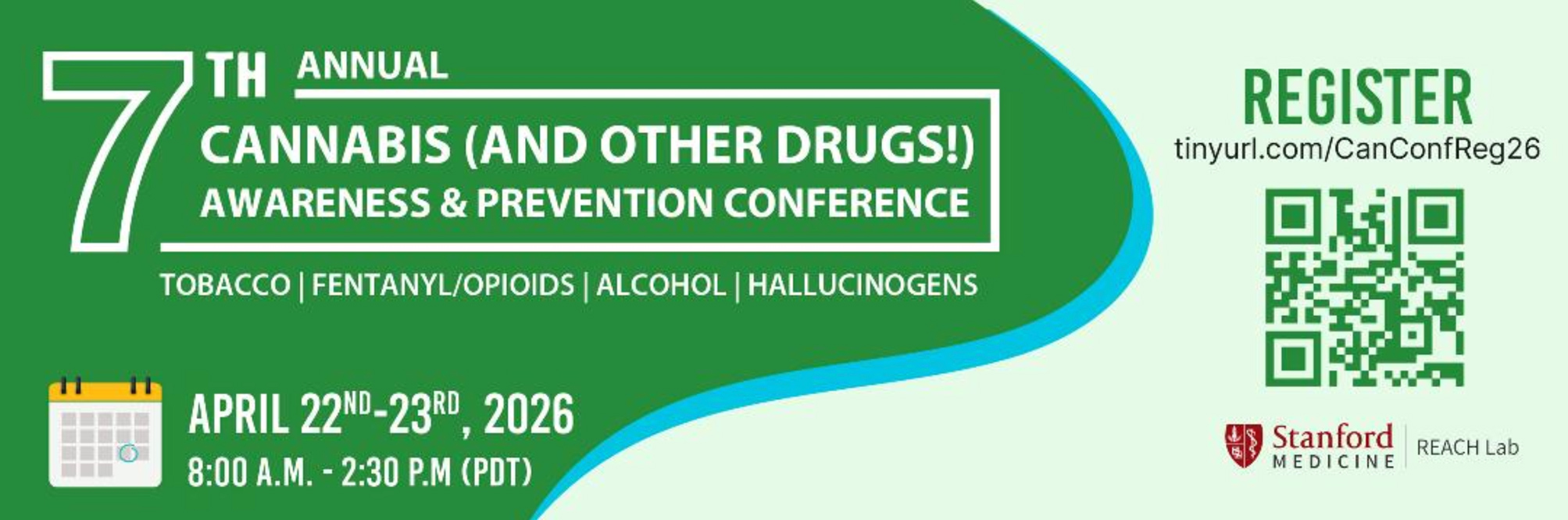
7th Annual Cannabis Awareness & Prevention Conference, April 22nd – 23rd, 2026
Interested in learning about cannabis and other substance prevention practices? Check out the upcoming 7th Annual Teaching Cannabis (and other drugs!) Awareness & Prevention Virtual Conference.
DHCS Announcements and Updates
New Online Training Launches January 12, 2026, to Support SUD Counselors
On January 12, 2026, DHCS, in partnership with the University of California San Diego Division of Extended Studies, will launch the Advancing SUD Counselor Education and Development (ASCEND) Program, a free, self-paced, 80-hour online training for substance use disorder (SUD) counselors. The program was developed with the University of California San Diego Division of Extended Studies and the Assembly Bill 2473 Stakeholder Advisory Group as part of DHCS’ ongoing efforts to strengthen the SUD workforce. The training is designed to be completed on your own schedule and features expert instruction from experienced professionals.
The curriculum covers 12 core competencies required for counselor certification. The ASCEND Program is approved by the California Association of DUI Treatment Programs to count toward a SUD Certified Counselor credential. For more information and to view a video about the ASCEND Program, visit the DHCS YouTube Channel. Registration is open on the University of California San Diego Division of Extended Studies website.
California Launches Mental Health Media Challenge for Boys and Young Men
The Children and Youth Behavioral Health Initiative, in partnership with Youth Creating Change, has introduced a new media challenge to raise awareness and reduce stigma around mental health for boys and young men ages 12–25. Participants are invited to create a 60-second Public Service Announcement for the Directing Change Film Contest, focusing on themes like openness about mental health, building resilience, and challenging cultural norms. Cash prizes will be awarded to top entries. Submissions are due by March 1, 2026.
This initiative aims to empower youth, foster peer support, and encourage conversations that normalize asking for help. For more information on eligibility criteria and how to join this challenge, visit The Directing Change website.
If you are interested in having your organization or prevention program featured in an upcoming bulletin, email Olivia Shrago at oshrago@cars-rp.org to get started!