
ABHPC Prevention Pathways Monthly Bulletin for April 2025
ABHPC Annual Survey – We Want to Hear from You!
Program feedback and suggestions are accepted from ABHPC TTA recipients and participants on an ongoing basis. In addition to individualized evaluation data collection following all TTA events, every year the ABHPC project team gathers suggestions from prevention professionals to gain a better understanding on TTA content that would be helpful in the future. We are excited to hear from you about how we can best support you in your primary prevention TTA needs. We invite you to provide feedback and ideas through our ABHPC Survey: https://www.surveymonkey.com/r/ABHPCsurvey

Health Disparities in Substance Use/Misuse Prevention
Health disparities are the differences in health care and health outcomes related to certain factors in a person’s life “including race and ethnicity, socioeconomic status, age, geography, language, gender, disability status, citizenship status, and sexual identity and orientation” (Kaiser Family Foundation, 2024). Intersectionality of different identities can amplify disparities and should be carefully considered when planning to reduce health disparities.
According to the Substance Abuse and Mental Health Services Administration (SAMHSA), substance use disproportionately affects inappropriately served communities including Black, Indigenous, and People of Color, Two-Spirited, Lesbian, Gay, Bisexual, Transgender, Queer+, people with disabilities, people living in rural communities, and people with economic disadvantages. Categories of health disparities are illustrated in the Social Drivers of Health Framework – Healthy People 2030 has identified various measures and efforts to address these disparities as well.
In SAMHSA’s article “Collaborative Substance Use Prevention: Stronger Together” SAMHSA identifies strategies that leverage risk and protective factors as a way to support equitable prevention work. In their words, those are:
- Integrate lived experiences by including people from underserved communities in program design, development, and implementation.
- Collaborate across the prevention continuum.
- Embrace culture — including culture as a protective factor.
- Address social determinants of health.
- Build coalitions and partnerships across sectors.
- Ensure our prevention work is centered in the voices and experiences of those most impacted.
National Arab American Heritage Month
April marks National Arab American Heritage Month. The month of recognition is organized by the Arab America Foundation, whose mission is to “promote the Arab heritage, educate Americans about the Arab identity, and to empower and connect Arab Americans with each other and with diverse organizations across the U.S.” This year’s theme for Arab American Heritage Month is “Honoring the Past, Inspiring the Future.” The theme encourages learning about the experiences of Arab Americans throughout history, promoting cultural pride, and celebrating successes and contributions of Arab Americans.
Arab American heritage is not defined by a singular country, religion, or experience. Arab heritage can be traced back to twenty-two different countries: Algeria, Bahrain, the Comoro Islands, Djibouti, Egypt, Iraq, Jordan, Kuwait, Libya, Morocco, Mauritania, Oman, Palestine, Qatar, Saudi Arabia, Somalia, Sudan, Syria, Tunisia, the United Arab Emirates, Lebanon, and Yemen. Only about 25% of Arab Americans practice Islam – a majority practice Christianity. Reasons for immigrating to the United States vary as well – some immigrants moved to escape political turmoil and persecution, others seeking opportunities for educational and economic growth, and others to reunite with family.
You can celebrate Arab American Heritage month through connecting with Arabic culture and supporting education and discussions on Arab heritage. Here are some resources to learn more:
- Read about Arab American history, culture, and practices in Arab Americans – History, Culture, & Contributions
- Explore Arab American art and historical documents through the Smithsonian’s Arab American Heritage Month spotlight.
- Peruse the New York City Public Schools’ website library of resources including videos, articles, resources for educators, and more on Arab American history.
Engaging Migrant Communities in Prevention Efforts
Engaging migrant communities in substance use/misuse prevention is crucial for promoting healthier lives and reducing health disparities. This is especially important in California as it is home to 10.6 million immigrants, the highest rate of any state in the United States. Data from the California Health Interview Survey (CHIS) suggests that the impacts of anti-immigrant rhetoric and policies has a negative impact on mental health for immigrant populations. CHIS studies show an increase in incidence of psychological distress and mismatched access to mental health care between 2015-2021.
Looking at immigration status as a social driver of health can help us conceptualize and address the link between the immigration experience and behavioral health outcomes. Fear of legal consequences, cultural stigma, and lack of access to culturally appropriate services are barriers to accessing treatment and related services. Loosely defined standards in the naturalization application process such as “good moral character” and “habitual drunkards” present barriers as well.
Effective outreach and prevention efforts tailored to these communities can help address these issues and reduce long-term health risks. Creating culturally sensitive prevention programs that consider language, social norms, and community values is essential for working alongside these populations. Involving immigration lawyers, judges, and advocates in substance use prevention efforts could increase awareness and improve outcomes for immigrant populations. Collaborating with community leaders and organizations that serve migrant populations can enhance the effectiveness of these programs, ensuring they are not only accessible but also resonate with the community’s needs.
National Public Health Week
For the last 30 years, the American Public Health Association (APHA) has organized National Public Health Week (NPHW) to recognize key successes and needs in public health in the United States. This year, NPHW falls on April 7-13. Each day focuses on a different key priority area – below are each day’s topics and tips for how to engage in these topics individually and at the community, state, and national level:
- It Starts Here: Your Health is Our Mission focuses on the influence public health has on all and the importance of engaging in public health.
- Climate Action Starts Here: Championing Resilience for Health explores the impact that climate change has on people’s physical and mental wellbeing.
- Health Equity Starts Here: Optimizing Health for All examines health disparities and methods to address them.
- Advocacy Starts Here: Amplifying Voices for Public Health empowers people to take action to better the public health of their environments.
- The Future of Public Health Starts Here: Strengthening the Public Health Workforce encourages wellbeing for the public health workforce.
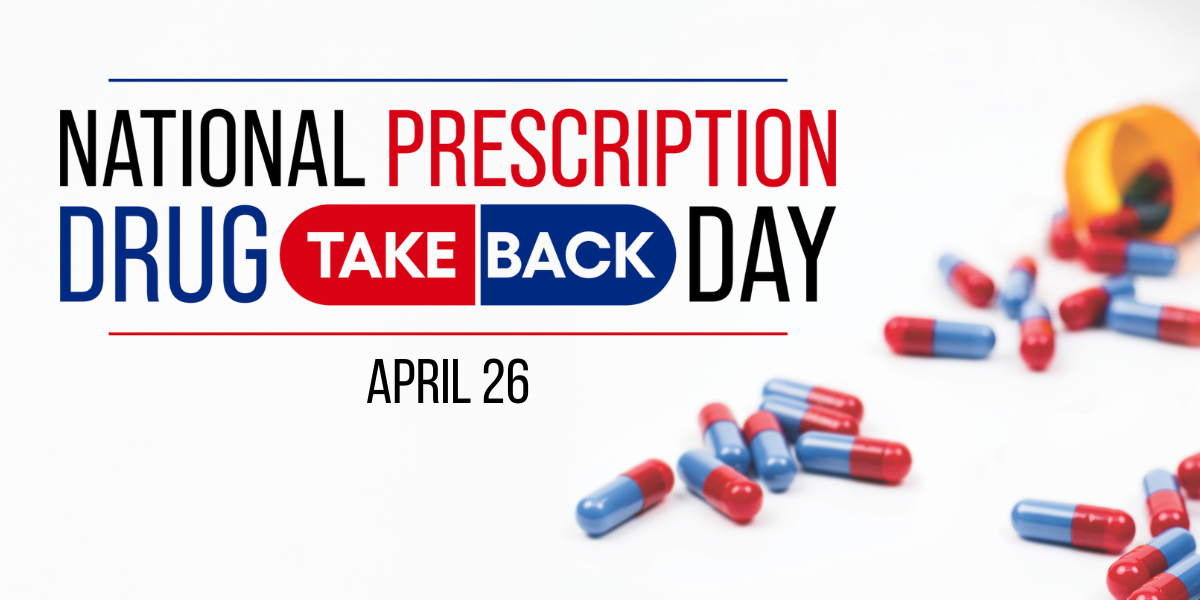
National Prescription Drug Take Back Day
April 26th is National Prescription Drug Take Back Day. National Prescription Drug Take Back Day is hosted by the United States Drug Enforcement Administration (DEA) and occurs twice a year on the last Saturday of April and October. Although many prescription drug collection sites are available year-round, the day is intended to increase awareness of the potential harms of improper prescription drug storage and how to prevent prescription drug misuse. During the most recent Take Back Day in October 2024, a total of 4,644 collection sites participated and 629,953 pounds of material were collected.
What are safe storage and disposal, and why are those practices important? Safe storage involves keeping prescription medication away from “unwanted” access. Storing medication in locked cabinets, educating children in the home about medication safety, and regularly checking inventory of medication are all ways to prevent unwanted access and use. Learning how to properly dispose of medication is another safe practice for both the home and the environment.
Where can I find a local drop-off site? You can use the DEA’s Year-Round Drop-Off Location finder or California’s Don’t Rush to Flush website to search for drop-off sites or boxes in your area.What efforts are being done in California? The California Department of Health Care Services’ Medication Assisted Treatment Expansion project hosts the California Drug Take-Back Program. During Phase I, the program installed safe medicine disposal bins throughout the state. Phase II of the program includes an educational program to promote safe drug take-back practices and engaging pharmacists and law enforcement in these efforts.
Strategic Prevention Framework (SPF): Implementation
The Strategic Prevention Framework (SPF) was created by the Substance Abuse and Mental Health Services Administration to provide prevention planners with a guide to comprehensively understand and address substance use and misuse in their communities. The steps of the SPF include assessment, capacity, planning, implementation, and evaluation. Cultural responsiveness and sustainability are woven throughout each step of the SPF.
Implementation is putting the Strategic Prevention Plan into action. Since what you implement is based on the data collected during the assessment phase, on the capacity you have, and additional capacity you build, your Plan replaces guesswork, intuitions and hunches with evidence-based programs and practices. Sometimes evidence-based programs can be implemented with fidelity; sometimes they have to be adapted to better reflect the attitudes, beliefs, experiences, culture, and values of your community and focus populations.
Community Spotlight: Song for Charlie
Contributor: Ed Ternan (he/him) Co-Founder of Song for Charlie
Song for Charlie (SFC) is a national family-led nonprofit dedicated to raising awareness about fentanyl, fake prescription pills, and healthier alternatives. After losing their son Charlie to a counterfeit prescription pill made with fentanyl in 2020, Ed and Mary Ternan founded SFC to ensure other families don’t experience similar tragedies. Through partnerships with the California Department of Health Care Services and other organizations, SFC has developed comprehensive prevention and education programs that reach hundreds of thousands of young people, families and communities annually. SFC’s flagship initiatives include The New Drug Talk, an evidence-informed resource for parents and caregivers; La Nueva Drug Talk, a culturally adapted program by and for Latinx communities; and youth outreach in schools, on social media and through partnerships with organizations like Major League Baseball. SFC’s new short film for teens, Real Talk About Fake Pills, is being shown in middle and high schools nationwide, and the organization’s peer-to-peer program empowers student leaders to educate classmates about the risks of fake pills, creating a ripple effect of prevention. This work exemplifies how personal tragedy can transform into positive community action through education and awareness. Learn more at songforcharlie.org, thenewdrugtalk.org, and lanuevadrugtalk.org.
DHCS Announcements and Updates
Funding opportunities: Drug-Free Communities Support Program
The U.S. Centers for Disease Control and Prevention has released the FY 2025 Notice of Funding Opportunity (NOFOs) for the Drug-Free Communities (DFC) grant. Eligible applicants can receive $125,000. The NOFOs were announced on March 19, 2025, and close on May 5, 2025. To learn more about the DFC grant and apply visit Drug-Free Communities (DFC) | Overdose Prevention | CDC.
If you are interested in having your organization or prevention program featured in an upcoming bulletin, email Olivia Shrago at oshrago@cars-rp.org to get started!