
ABHPC Prevention Pathways Monthly Bulletin for December 2024

International Day of Persons with Disabilities
International Day of Persons with Disabilities (IDPD) is a United Nations Day celebrated annually on December 3rd. IDPD brings awareness to the successes and contributions of people with disabilities world-wide, as well as the barriers to inclusivity present in current society. This year’s theme for IDPD is “Amplifying the leadership of persons with disabilities for an inclusive and sustainable future.”
It is important for prevention professionals to support inclusion and belongingness for people with disabilities in efforts, planning, and programming. Addressing disparities in the Social Drivers of Health (healthcare access and quality, education access and quality, social and community context, economic stability, and neighborhood and built environment) can lead to improved outcomes for folks with disabilities. Below are a few examples from Healthy People 2030 on these barriers and methods to address them:
- Healthcare Access and Quality/Economic Stability:
- Reduce the proportion of adults with disabilities who delay preventive care because of cost. Methods include telemedicine, coordinated care, and shared decision-making.
- Education Access and Quality:
- Increase the proportion of students with disabilities who are usually in regular education programs. Increased time in integrated classrooms can improve opportunities for educational, physical, and social activities.
- Social and Community Context:
- Reduce the proportion of people with intellectual and developmental disabilities who live in institutional settings with 7 or more people. This goal aims to support individual decision making and increase opportunities for educational, physical, and social activities.
- Reduce anxiety and depression in family caregivers of people with disabilities. This goal is still being developed, but it is important to address the needs and wellbeing of caregivers of people with disabilities.
When working alongside people with disabilities as a priority population, there are ways to create
programs that are inclusive and accessible. See below a few ideas for improving access to prevention efforts and services:
- Become familiar with national and California-specific legislation.
- Consider accessibility of services:
- Are programs or meetings held in physically accessible places?
- If someone is taking public transportation, how far will they have to walk to a program or meeting place?
- Are programs and materials offered in braille, or with sign language interpreters?
- Engage people with disabilities in the prevention program planning process. Ask how to ensure services are accessible.
- Learn about implicit bias and how it shows up when working with people with disabilities.

CSAP 6 Prevention Strategies: Environmental Strategies
The Center for Substance Abuse Prevention (CSAP) has developed six major prevention strategies: information dissemination, prevention education, positive alternatives, environmental strategies, community-based processes, and problem identification and referral. These broad categories are used to describe the types of approaches effective in comprehensive substance use prevention.
Environmental strategies focus on community‐level impact, instead of solely on individual behavior. The goal is to change a community’s standards, regulations, and attitudes around substance use. Strategic efforts include policies or regulations, media strategies, compliance efforts, social norms marketing, community development, and neighborhood mobilization. This strategy is a comprehensive public health approach.
Community assessments are a helpful starting point for environmental prevention. Research shows that high concentrations of liquor stores are linked to negative community health outcomes. Environmental prevention methods to address this would include zoning ordinances to regulate locations of alcohol retail outlets and bars, compliance checks to ensure retail policies and alcohol laws are being followed and modifying alcohol advertising and pricing practices. Replacing some of those businesses with alternatives that offer healthy food options or space for substance-free activities can help mitigate harm related to liquor store density.
Education is another component of environmental strategies. In California, it is mandatory for servers and managers of “on-premise” alcohol sale locations to take the Responsible Beverage Service Training and pass an exam for certification. The training covers the dangers of serving alcohol to people under the age of 21 and over serving customers. Environmental prevention efforts were successful in mandating this training through the state assembly and therefore keeping communities safer.

National Impaired Driving Prevention Month
December marks National Impaired Driving Prevention month. This month was developed by the
National Highway Traffic Safety Administration, the White House’s Office of National Drug Control
Policy, and the Substance Abuse and Mental Health Services Administration to bring awareness to the dangers of driving while using drugs or alcohol. According to the National Safety Council, alcohol is involved in approximately 10,000 traffic fatalities in the United States per year. Factors besides alcohol that can impair driving include drugs, prescription or over-the-counter medication, and fatigue or stress.
Impaired driving can be addressed through environmental prevention strategies. Laws and policies such as the legal drinking age and driving under the influence laws help prevent impaired driving. Media campaigns like Drive Sober or Get Pulled Over and Buzzed Driving is Drunk Driving can educate the community about the dangers of impaired driving and support individual prevention planning such as ride sharing and identifying designated sober drivers. Local community groups such as Mothers Against Drunk Driving chapters can mobilize prevention efforts and provide resources for community members to get involved.
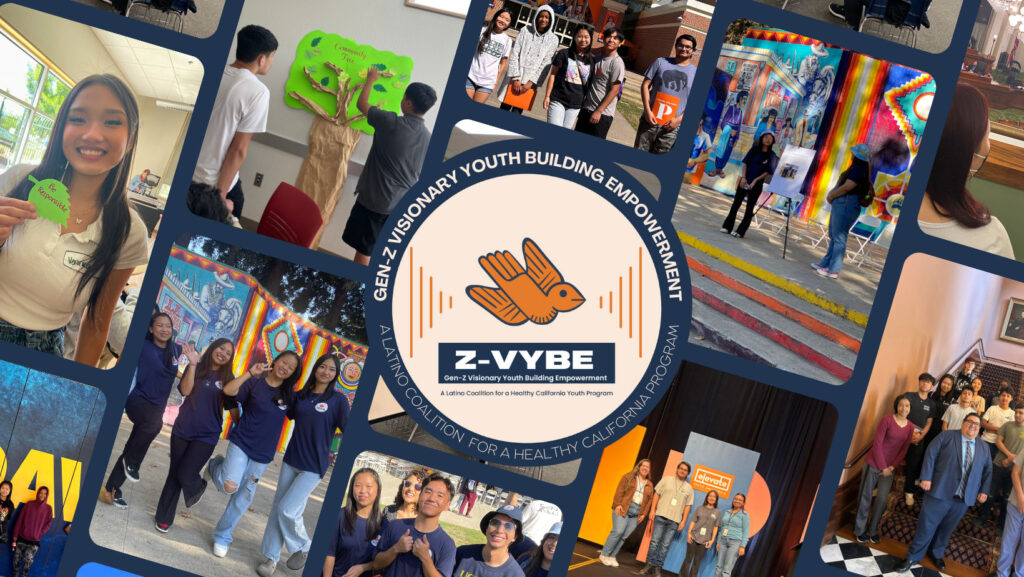
Community Spotlight: Gen-Z Visionary Youth Building Empowerment (Z-VYBE)
Guest Contributor: Angela Maldonado (she/they) – Youth Program Manager
Gen-Z Visionary Youth Building Empowerment (Z-VYBE) is an initiative within Latino Coalition for a Healthy California’s broader Latine and Indigenous Workforce Institute. The Z-VYBE program offers an immersive experience for high school students aimed at enhancing their civic engagement. Through Z-VYBE, participants explore topics such as mental health, the effects of substance use and misuse, the significance of civic involvement, youth advocacy, and the social factors influencing health, among others. Participants meet once weekly to discuss learning topics, plan youth-led events, and plan civic advocacy actions in their community. Students will have the chance to cultivate and maintain positive civic relationships with local leaders.
Students learn about creating community solutions that empower their peers and do not use systems that have historically disenfranchised our communities. In conversations with students, we explore avenues for non-carceral solutions to challenges we experience in our communities. Our program and scholarship provide opportunities for students to continue to grow in their leadership and professional opportunities even after the conclusion of the program. Z-VYBE students can apply for the Health Justice Fellowship once they move into college, which is another in-house fellowship program that supports career and professional growth in policy advocacy spaces.
Z-VYBE is an excellent opportunity for young people interested in public health or policy who want to develop their civic skills in a supportive and enriching environment.
If you are interested in having your organization or prevention program featured in an upcoming bulletin, email Olivia Shrago at oshrago@cars-rp.org to get started!